
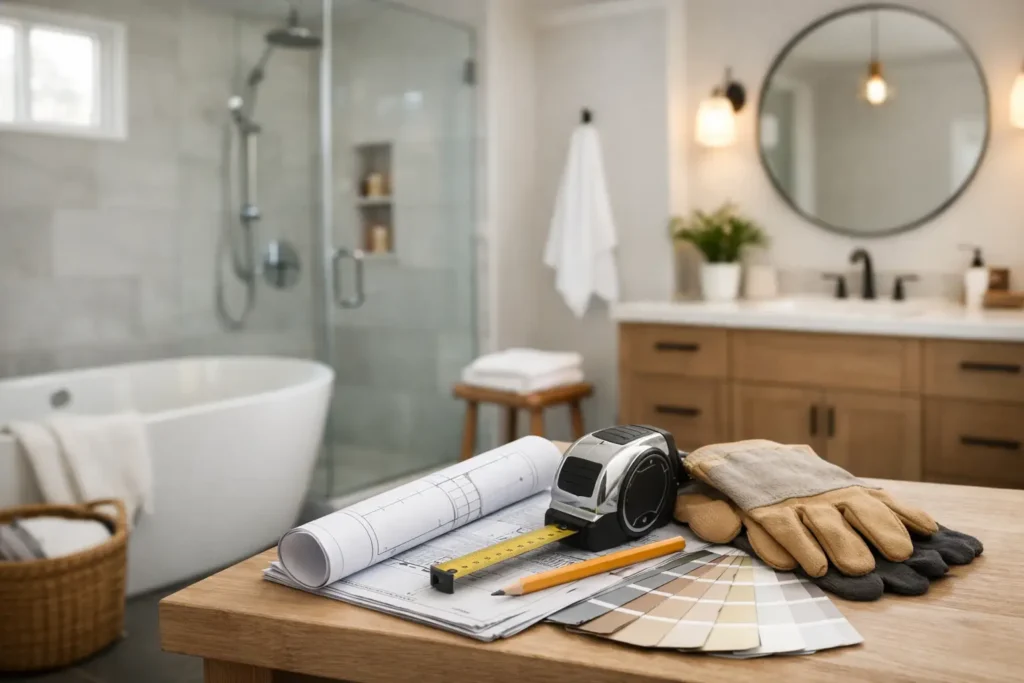
A good bathroom should make the busiest part of the day feel easier. It needs to cope with rushed school mornings, relaxed evening baths, guests, storage, steam and the everyday wear that comes with family life. That is why a bathroom renovation is about far more than choosing attractive tiles. It is an opportunity to create a considered room that feels calm, functions beautifully and adds lasting value to your home.
For homeowners in London, where bathrooms are often compact and existing layouts can be restrictive, the difference between a merely updated room and a genuinely successful renovation lies in the planning. The finest finishes will not compensate for inadequate storage, poor lighting or a shower enclosure that makes the space feel cramped. A well-managed project considers how you live first, then brings the practical and visual details together with precision.
Start a Bathroom Renovation With How You Live
The most useful question is not, “Which style do I like?” It is, “What frustrates me about this room every day?” Perhaps there is never enough surface space around the basin. Perhaps the bath is rarely used while the shower is too small. Perhaps two people need to get ready at once, or a growing family needs more concealed storage.
These answers should shape the layout from the outset. Replacing fittings in their existing positions can be cost-effective, particularly where the current plumbing arrangement works well. However, retaining a poor layout simply to avoid alterations can be a false economy. Moving a wall-hung WC, enlarging a shower or repositioning a basin may transform how the room feels and performs. It can also affect the budget, programme and technical requirements, so these decisions are best made early.
For a principal bathroom, think about the morning routine as a sequence: entering the room, using the basin, accessing towels, showering and getting dressed. In a family bathroom, prioritise durable surfaces and easy cleaning. In an en-suite, a more spa-like approach may be appropriate, with warmer lighting, larger-format finishes and a generous walk-in shower. The right solution depends on the household, not a passing trend.
Plan the Layout Before Choosing Finishes
A refined bathroom begins with sound proportions. There must be enough room to use every fitting comfortably, open doors and drawers, and clean around the edges. This is especially relevant in Victorian terraces, period conversions and London flats, where awkward corners, chimney breasts and compact footprints are common.
A walk-in shower can create a more open feel, but it needs careful consideration. A fixed glass screen may be ideal for a larger room, while a compact enclosure can contain water more effectively in a tight layout. Similarly, a freestanding bath makes a strong visual statement but requires breathing room around it. Where space is limited, a fitted bath with a glass shower screen can deliver a more practical result without compromising on quality.
Wall-hung furniture is another effective way to improve the sense of space. Raising a vanity unit off the floor reveals more flooring and makes cleaning easier, while drawers tend to offer more useful storage than a traditional cupboard. Recessed mirrored cabinets can provide essential storage without adding visual bulk. These details are modest individually, but together they create a bathroom that feels ordered rather than overcrowded.
The hidden work matters as much as the visible work
Bathrooms demand exacting technical work behind the finished surfaces. Waterproofing, drainage falls, ventilation, pipework, electrical zones and substrate preparation all influence the longevity of the room. A beautifully tiled shower that has not been properly tanked is not a luxury finish – it is a future problem waiting to surface.
This is where a structured renovation process provides reassurance. Before work begins, the scope should be clear: what is being removed, what is being retained, which fittings are included, and how plumbing, electrics, tiling and decoration will be coordinated. An itemised quote helps homeowners understand the investment and reduces the risk of uncomfortable surprises once the room is stripped back.
Set a Budget That Protects the Result
Bathroom budgets vary widely because the work involved varies widely. A straightforward refresh using an existing layout has very different demands from a full reconfiguration with new pipe runs, underfloor heating, bespoke joinery and premium stone finishes.
It is sensible to allocate the budget across both visible products and the work that supports them. Tiles, brassware and sanitaryware matter, but so do preparation, waterproofing, skilled installation, ventilation and finishing. Cutting back on the latter to fund a more expensive tap or statement tile rarely delivers the polished, durable outcome homeowners expect.
Allowing a contingency is also prudent, particularly in older properties. Once existing finishes are removed, issues such as uneven walls, ageing pipework or concealed water damage may need attention. A transparent contractor will explain these possibilities before the project starts, communicate quickly if they arise, and agree the next steps rather than making assumptions.
There is value in choosing products with long-term performance in mind. Quality brassware, for example, should feel solid and have accessible replacement parts. Porcelain tiles are durable and easy to maintain, while natural stone offers character but may require more care and sealing. Large-format tiles can make a room appear more spacious through fewer grout lines, though they may involve more cutting and substrate preparation in an irregular space. The best choice balances appearance, maintenance and budget.
Create Comfort Through Lighting, Ventilation and Storage
Bathrooms often have one central ceiling light, which can make even an expensive scheme feel flat. Layered lighting is more practical and far more flattering. General ceiling lighting provides everyday brightness, while illuminated mirrors or wall lights around the basin improve visibility for grooming. Dimmable lighting can soften the atmosphere in the evening, particularly in an en-suite or family bathroom used for bath time.
Ventilation deserves equal attention. Steam is unavoidable, but persistent moisture should not be. A correctly specified extractor fan, positioned and ducted appropriately, protects painted surfaces, joinery and grout lines while helping the room remain fresh. It is one of the less glamorous decisions in a bathroom renovation, yet it has a direct impact on how well the space ages.
Storage should be planned around real possessions, not imagined minimalism. Consider where cleaning products, spare toilet rolls, cosmetics, towels and electrical grooming tools will go. A tall cabinet may be more useful than a wider vanity in a narrow room. A recessed niche in the shower can remove the need for cluttered corner caddies, but it must be designed around tile sizes and waterproofing requirements from the beginning.
Choose a Team That Manages the Whole Picture
A bathroom project brings several trades into a small, highly visible space. Demolition, plumbing, electrics, plastering, waterproofing, tiling, carpentry, fitting and decorating must happen in the right sequence. Without careful coordination, even a modest room can become unnecessarily disruptive.
For homeowners who want a more confident experience, the benefit of an end-to-end renovation partner is clear. One team can guide design decisions, establish a realistic programme, manage the trades and maintain communication throughout the build. This reduces the pressure of chasing separate installers or trying to resolve gaps between one contractor’s work and another’s.
Before appointing a contractor, look for clarity rather than vague assurances. Ask how the quotation is structured, who will oversee the project, how variations are handled, and when key decisions must be signed off. You should also understand the expected timeline and how your home will be protected while work is underway. Reliable delivery is not just about completing the bathroom on time. It is about keeping the process organised, respectful and predictable.
ARC Global Engineering approaches bathroom projects as complete home improvements, combining tailored planning with quality workmanship and accountable project management. The aim is not simply to install new fittings, but to deliver a finished room that feels considered in every detail.
A Bathroom That Continues to Earn Its Place
The strongest bathroom schemes do not rely on a single dramatic feature. They feel balanced: the shower is generous enough, the basin area is uncluttered, the lighting is useful, the storage is discreet and the finishes remain enjoyable after years of use. That quiet sense of ease is the real mark of quality.
Take the time to plan for the life you live now, while leaving room for how it may change. A carefully delivered bathroom renovation can turn an overlooked daily necessity into one of the most satisfying rooms in the house.