
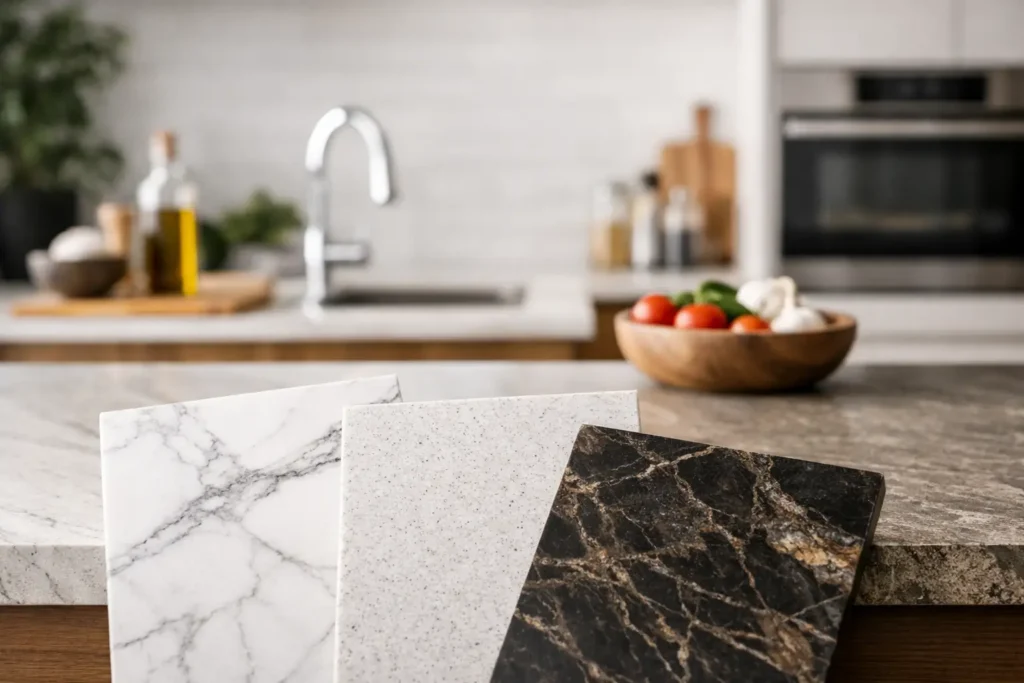
A worktop is often one of the last major surfaces fitted, yet it shapes how the whole kitchen feels and functions for years. Thoughtful kitchen worktop selection is not simply about choosing a colour sample under showroom lighting. It is about matching a material to the way your household cooks, entertains, cleans and lives.
For a busy family kitchen, a surface that looks immaculate but marks easily can soon become a source of frustration. Equally, choosing solely on durability may leave a newly renovated room feeling colder or less considered than you had hoped. The right answer sits where practicality, visual balance, budget and expert fitting meet.
Start with how your kitchen will be used
Before comparing materials, be honest about the demands your kitchen will face. A calm, design-led space used mainly for breakfast and occasional hosting needs something different from a hard-working open-plan kitchen where children do homework, meals are prepared daily and guests gather around an island.
Consider whether you regularly place hot pans down, whether spills are likely to sit before being wiped away, and how comfortable you are with routine maintenance. Think about the areas that take the most wear too. The space around the hob, sink and breakfast bar will often dictate the best material more than the kitchen’s overall style.
Worktop depth and layout matter just as much. A generous island can carry a bolder stone pattern beautifully, while a smaller galley kitchen may benefit from a quieter finish that keeps the room feeling open. If you are extending your home or reconfiguring the ground floor, reviewing the worktop alongside lighting, cabinetry and flooring will produce a far more cohesive result than treating it as a final standalone choice.
Kitchen worktop selection: compare the main materials
There is no universally perfect worktop. Each option has strengths, limitations and a different character in the finished room.
Quartz for reliable everyday luxury
Engineered quartz remains a popular choice for premium London kitchen renovations because it offers consistency, durability and a broad range of finishes. It is non-porous, so it resists most everyday stains without the regular sealing associated with many natural stones. From clean whites and soft concrete effects to warm veining, quartz can suit both contemporary and more classic cabinetry.
It is particularly well suited to households wanting a polished finish with minimal maintenance. However, quartz is not invulnerable. Very high heat can cause damage, so trivets remain sensible near the hob, and sharp impacts on an exposed edge can chip the surface. Quality also varies, making supplier choice and professional fabrication essential.
Natural stone for one-of-a-kind character
Marble, granite and quartzite bring depth and natural variation that engineered materials cannot replicate exactly. Each slab has its own veining, movement and tonal shifts, which can turn an island or splashback into the focal point of the room.
Granite is generally hard-wearing, while quartzite can offer striking natural movement with strong performance. Marble is prized for its timeless appearance, but it is softer and more reactive to acidic foods and liquids. Etching, marks and subtle changes are part of marble’s character, rather than a defect. It is a beautiful choice for homeowners who appreciate a living finish and are willing to care for it accordingly.
Natural stone usually requires sealing and should be selected from the actual slab where possible. A small sample cannot fully show the scale of veining or variation you will see across a large kitchen island.
Porcelain and sintered stone for heat resistance
Porcelain and sintered stone surfaces are increasingly chosen for sleek, architectural kitchens. They can be highly resistant to heat, staining and UV exposure, making them a strong option for bright spaces with large doors or rooflights. Their slim profile also works well in pared-back schemes where a crisp, contemporary edge is part of the design brief.
These materials demand experienced handling during fabrication and installation. Although the surface is extremely hard, edges and cut-outs need careful planning to reduce the risk of damage. A well-managed installation team will ensure the substrate, joins and appliance apertures are designed around the chosen slab rather than forced into place at the end.
Solid surface for smooth, practical detailing
Solid surface worktops offer a refined, uninterrupted look, particularly when paired with integrated sinks or curved details. Joins can often be made discreetly, which is useful in compact kitchens or schemes where visual calm is a priority.
They are repairable in many cases and comfortable to the touch, but they are less resistant to heat and scratching than quartz or porcelain. They suit homeowners who value a clean, tailored appearance and are happy to use chopping boards and heat protection as part of normal kitchen care.
Timber, laminate and compact laminate for warmth or value
Timber introduces warmth that can soften painted cabinetry, stone floors and modern metal finishes. It develops a patina over time and can often be sanded and refinished, but it needs diligent protection from standing water, especially around the sink. This makes it a considered choice for breakfast bars, secondary runs or kitchens where natural character is more important than a pristine uniform finish.
Laminate has progressed well beyond its earlier reputation. Good-quality options now recreate stone, timber and textured finishes convincingly at a more accessible price point. It can be an excellent route to a smart, hard-wearing kitchen, although exposed edges, seams and heat resistance need careful attention.
Compact laminate is a slimmer, more durable alternative that can create a crisp modern profile. It is especially useful where budget control matters but the design still calls for a considered finish.
Make colour and pattern work with the whole room
A worktop should support the kitchen rather than compete with every other finish. If cabinetry is richly painted or strongly grained, a quieter worktop often gives the room room to breathe. If the cupboards are simple and neutral, a dramatic veined slab may provide the personality.
Look at samples in the property, not only in a showroom. London light changes considerably between a north-facing Victorian terrace, a glazed rear extension and a bright top-floor flat. View samples beside cabinet doors, flooring, wall paint and splashback choices at different times of day. Warm white surfaces can appear creamy beside cool cabinetry, while grey tones may read blue in certain light.
Also consider the scale of the pattern. Fine veining may disappear across a wide island, while bold movement can feel overwhelming in a compact kitchen. A bookmatched stone splashback can be exceptional in the right setting, but it should be planned as part of the full composition.
Plan the details before fabrication begins
The best material can still disappoint if the practical details are rushed. Worktop decisions should be confirmed before cabinets are templated, not after. Sink type, tap position, hob specification, draining grooves, pop-up sockets and splashback height all affect fabrication.
An undermounted sink creates a clean, premium line with quartz, stone, porcelain and solid surface. It also makes wiping crumbs from the worktop directly into the sink easier. A Belfast or inset sink has a different visual and fitting requirement, particularly where timber or laminate is involved.
Edge profiles deserve attention too. A simple eased edge is versatile and contemporary, while a deeper built-up edge can give an island more presence. Overhangs for seating must be properly supported, especially with heavier stone surfaces. These are not small finishing choices – they affect comfort, safety and the longevity of the installation.
Budget for the finished result, not only the slab
When comparing quotations, ask what is included beyond the material itself. Templates, fabrication, delivery, lifting, cut-outs, edge detailing, upstands, splashbacks and installation can materially change the final figure. The number of joins and the complexity of the layout also matter.
A less expensive surface installed with poor joins or inaccurate cut-outs is rarely good value. Conversely, a premium slab used strategically on an island, with a complementary material on secondary runs, can deliver a high-end look while keeping investment focused where it will have the greatest visual impact.
At ARC Global Engineering, we approach worktop choices as part of the wider renovation plan, coordinating measurements, cabinetry, plumbing, appliances and finishing details so that the final fit feels deliberate rather than improvised.
The most successful kitchen worktop is the one you can use confidently every day while still enjoying the way it looks when the room is quiet. Take time to handle the samples, ask how each material will age, and choose a finish that suits your real life as well as your original vision.