
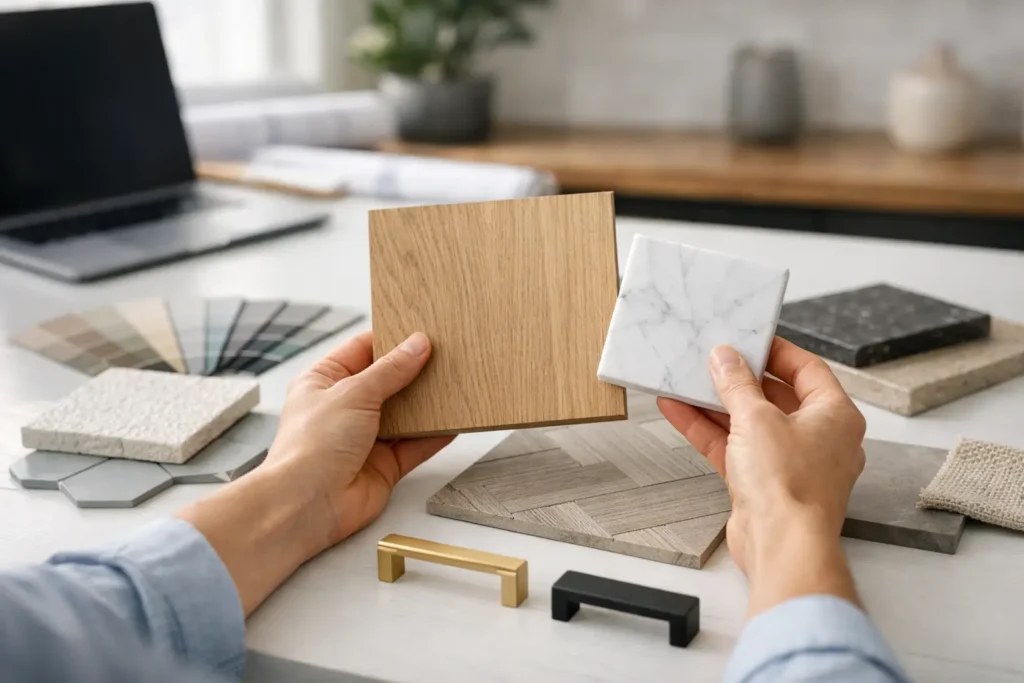
A kitchen can look exceptional in a showroom and still be the wrong choice for a busy family home. The same applies to bathroom tiles, flooring, worktops and paint finishes. If you are wondering how to choose renovation finishes, the right starting point is not colour charts or mood boards. It is how you live, what level of wear your home needs to handle, and how you want each space to feel five years from now, not just on handover day.
The most successful renovations are rarely built around individual products. They are built around a clear plan. Finishes should support the way you use your home, reflect your personal taste and sit comfortably within the wider investment you are making. That is where many homeowners go wrong – they choose each item in isolation, then struggle to make the whole scheme feel consistent, practical and worth the spend.
How to choose renovation finishes without costly changes
The easiest way to avoid expensive revisions is to decide on your priorities before you fall in love with materials. In most homes, there are three that matter most: appearance, durability and budget. You can absolutely aim for all three, but there are always trade-offs.
For example, a beautifully veined natural stone may bring more character than a man-made surface, but it may also need more maintenance. A matt paint finish can look refined and contemporary, but in high-traffic family areas it may mark more easily than an eggshell or washable alternative. Wide timber boards can create a premium feel, yet they may be less forgiving in rooms with fluctuating moisture levels.
That does not mean one option is better than another. It means the best choice depends on the room, the household and the standard of upkeep you are realistically happy to maintain.
Before any selections are made, it helps to ask a few straightforward questions. Is this a forever home or a medium-term upgrade? Do you have young children, pets or heavy daily use? Are you creating a calm, minimal backdrop or a more decorative interior? Once these answers are clear, the finish schedule becomes much easier to shape.
Start with the fixed elements first
When people think about finishes, they often begin with paint. In reality, paint is one of the easiest items to adjust later. The bigger decisions are the finishes that are harder or more expensive to replace once installed.
Flooring, wall tiling, sanitaryware, kitchen cabinetry, worktops and internal doors should usually come first. These form the visual and practical backbone of the renovation. Once these are set, it becomes simpler to choose supporting finishes such as wall colours, ironmongery, light fittings and soft furnishings.
This approach also creates better control over budget. If you commit too early to decorative details, you can end up overspending on items that have less impact than the core materials. A balanced scheme usually comes from investing well in the surfaces and fittings you touch and see every day, then keeping the secondary elements disciplined.
In London homes especially, where layouts can vary from compact period properties to large open-plan extensions, finish choices need to respond to the architecture. A basement kitchen extension may call for lighter surfaces to maximise brightness, while a period hallway may benefit from finishes that respect original character rather than compete with it.
Choose a lead finish for each room
A simple way to create cohesion is to identify one lead finish in every main space. In a kitchen, this might be the worktop. In a bathroom, it could be the wall tile. In a living area, it may be the flooring.
Once you have that anchor, the remaining selections can support it rather than fight for attention. This reduces decision fatigue and helps the room feel resolved. Premium interiors rarely rely on lots of statement materials at once. More often, they use a restrained palette with one or two moments of contrast.
Think beyond appearance
A finish may look perfect in a sample box and still disappoint in daily use. This is why performance matters just as much as style.
In kitchens, consider heat resistance, staining, scratch performance and how visible fingerprints will be. In bathrooms, think about slip resistance, grout maintenance and how different tile sizes affect cleaning. In family living areas, ask how flooring will cope with foot traffic, toys, pets and direct sunlight.
Texture matters too. Highly polished surfaces reflect light beautifully, but they can also show marks more readily. Very textured materials can add warmth and depth, though they may trap dust or require more careful cleaning. The right answer is often a middle ground – refined enough to feel elevated, practical enough to support everyday living.
This is particularly important if your renovation is intended to make life easier, not just more stylish. Finishes should reduce friction in the home. They should not create a maintenance list you regret after the first few months.
How to choose renovation finishes that feel cohesive
A polished result does not come from matching everything. It comes from repetition, balance and restraint. The strongest schemes tend to repeat tones or textures across different surfaces so the house feels connected from room to room.
That might mean carrying a warm timber tone through flooring, shelving and joinery details. It might mean repeating brushed brass in lighting, handles and bathroom fittings. Or it could mean using a consistent stone look across kitchen and utility areas, even if the exact application changes.
What you want to avoid is every room feeling like a separate project. Unless that is a deliberate design choice, too many unrelated finishes can make a home feel unsettled.
A useful rule is to keep your core palette tight, then layer variation through shape, texture and smaller accents. For example, the same neutral base can feel richer when paired with fluted glass, natural timber, soft plaster tones or a darker feature colour in selected areas.
Test finishes in the real space
Samples should always be viewed at home, in natural daylight and artificial evening light. This is where many expensive mistakes are avoided. A tile that looks warm in a showroom may read cold in a north-facing room. A paint colour that feels calm on a swatch may look flat across an entire wall.
Place samples next to each other rather than judging them individually. Flooring beside cabinetry, worktop beside splashback, tile beside grout. That relationship matters more than any single product on its own.
If possible, review selections over several days. Good finish decisions usually become clearer with time. Impulse choices often create the problems later.
Budget well, not cheaply
Choosing finishes is not about spending the most. It is about spending with intention. Some items justify a higher investment because they affect both daily use and overall perception of quality. Others can be specified more efficiently without compromising the final look.
Worktops, flooring and fitted joinery often earn their budget because they cover large visual areas and take regular wear. Decorative pendant lighting or feature mirrors can sometimes be sourced more flexibly without changing the standard of the renovation.
There is also value in consistency of quality. One very expensive finish surrounded by lower-grade basics does not always create a premium result. Often, a more balanced selection across the whole project feels more considered and delivers better long-term satisfaction.
This is where structured planning makes a difference. A clear specification schedule, discussed early in the project, helps prevent that familiar pattern of overspending in one area and then making rushed compromises elsewhere. It also reduces delays, because your builder and suppliers can work from decisions that are properly signed off.
Match finishes to the life stage of your home
A newly extended family kitchen has different demands from a guest en suite or a loft room used as a quiet home office. The finish standard should reflect that.
In high-use spaces, favour materials that are proven, easy to maintain and unlikely to date quickly. In lower-traffic rooms, you may have more freedom to be expressive with colour, texture or pattern. This is often the smarter way to introduce personality without risking fatigue in the spaces you use most.
Period homes also benefit from a degree of sensitivity. That does not mean everything must look traditional. It means the finishes should feel appropriate to the proportions, light and character of the property. A modern intervention can work beautifully in an older home when it is intentional and well balanced.
For homeowners investing in a premium renovation, the goal is not simply to impress on completion. It is to create a home that still feels composed, practical and enjoyable after real life has settled back in.
Choosing finishes well takes more than good taste. It takes clarity, discipline and a realistic view of how your home needs to perform. When selections are made in the right order, tested properly and aligned with your lifestyle, the finished result feels effortless – and that is usually the clearest sign that the decisions were the right ones.