
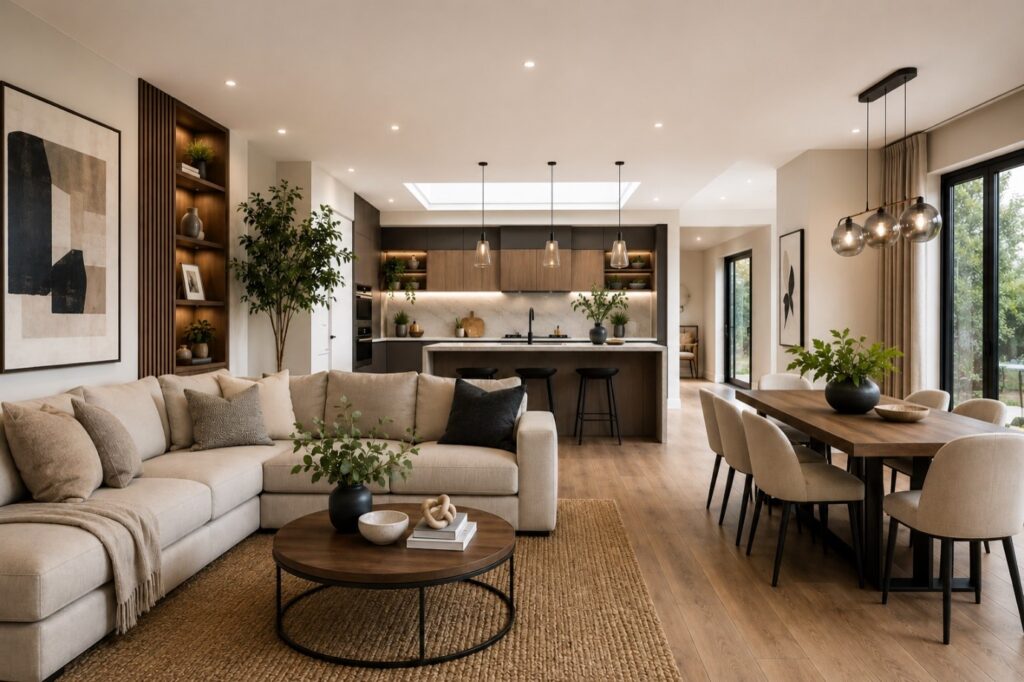
A beautiful interior rarely begins with paint charts or furniture shopping. It begins with clarity. If you are wondering how to plan home interior design, the most effective starting point is not style alone, but how you want your home to work day to day. The homes that feel calm, practical and polished usually come from good decisions made early, before a single tile, light fitting or sofa is chosen.
That matters even more when you are renovating rather than simply redecorating. Once walls move, electrics shift or bespoke joinery is introduced, every design choice starts affecting cost, programme and overall finish. A well-planned interior is not just visually pleasing. It supports your routine, suits your property, and avoids the expensive stop-start decisions that create stress during a build.
How to plan home interior design from the inside out
The strongest interior schemes are shaped by function first, then refined through materials, colour and detail. That may sound obvious, but many homeowners do the reverse. They save images, fall in love with a kitchen style or bathroom finish, and only later realise the layout does not support the way they live.
Start by looking honestly at your current home. Which spaces feel cramped, underused or disconnected? Where does clutter build up? Which rooms are too dark, too formal or simply not earning their footprint? These questions reveal more than aesthetic preferences. They highlight what your renovation actually needs to solve.
For a family home, that might mean designing stronger connections between kitchen, dining and living areas. For professionals working from home, it may mean better acoustic separation, more concealed storage and lighting that works across the whole day. For period properties in London, it often involves balancing original character with modern practicality, particularly where layouts feel fragmented or storage is limited.
When this stage is rushed, interiors can end up looking impressive in photographs but awkward in daily life. A generous island, for example, may look ideal on paper yet restrict movement if clearances are too tight. Open plan living can feel spacious, but without zoning it may also feel noisy and visually unsettled. Good planning is always about trade-offs, and the right answer depends on the property and the people using it.
Define what success looks like
Before choosing finishes, define what a successful outcome means for you. That might be a home that feels lighter and more open, one that is easier to keep tidy, or one that feels more aligned with your taste and stage of life. This sounds simple, but it is the point that keeps a project coherent.
Try to identify three priorities and rank them. They may include entertaining, family practicality, long-term durability, resale appeal, luxury detailing or improved storage. If every goal carries equal weight, decision-making becomes slow and expensive. If you know, for instance, that calmness and durability matter more than trend-led styling, it becomes easier to reject finishes that look striking but will date quickly or mark easily.
This also helps when multiple rooms are involved. A whole-home interior plan should feel consistent, but not repetitive. Bedrooms, bathrooms, kitchens and living spaces all need different things from a practical point of view. What ties them together is not identical design, but a shared visual logic – similar tones, complementary materials, repeated detailing and a considered flow from one room to the next.
Build your layout before your look
A strong layout is the framework that everything else sits on. It governs circulation, furniture placement, natural light, storage opportunities and where key features should go. In renovation work, it also affects plumbing, structural changes, heating, electrical planning and lead times.
Begin with scale. Measure each room carefully and map out what needs to fit, not what you hope might fit. This includes furniture, clear walkways, opening doors, wardrobe depths and practical working space in kitchens and bathrooms. A room may technically accommodate a larger sofa or freestanding bath, but if it compromises movement or proportion, it is the wrong choice.
Think about sightlines as well. What do you see when you enter the room? Where does the eye naturally land? Good interiors often feel composed because visual clutter has been reduced and focal points have been chosen deliberately. That could be a run of bespoke cabinetry, a statement pendant over a dining table, or a simple framed view to the garden.
In homes where layouts are being reconfigured, this is the stage where professional planning adds real value. Coordinating design ambition with buildability, timelines and cost control is what prevents attractive ideas becoming impractical ones.
Plan for movement and daily rhythm
Interior design is not static. People move through spaces, use them at different times and need them to perform under pressure. Morning routines, school runs, hosting friends, working from home and winding down in the evening all place different demands on a home.
That is why circulation matters so much. A kitchen should not only look refined; it should allow more than one person to move comfortably. A bedroom should not only fit wardrobes; it should feel restful once doors open and routes around the bed are considered. A bathroom may need to feel luxurious, but it also needs enough practical storage to keep surfaces clear.
When planning a home interior, imagine ordinary Tuesdays rather than idealised weekends. That is usually where the best design decisions are made.
Set a realistic budget for the full picture
One of the most common planning mistakes is underestimating what creates a finished result. Homeowners often budget for the obvious headline items, then get caught by the cumulative cost of the details – flooring transitions, ironmongery, decorative lighting, fitted storage, specialist paint finishes, window treatments and installation.
A clear budget should separate structural work, first fix and second fix elements, furniture, and decorative layers. It should also include a sensible contingency, especially in older properties where hidden issues are more likely to appear once work begins. This is particularly relevant across many London homes, where age, previous alterations and access constraints can affect both scope and sequencing.
Spending well does not always mean spending more. It means choosing where quality matters most. Bespoke joinery, worktops, flooring and sanitaryware often justify investment because they affect daily use and long-term wear. Some decorative pieces can be phased later. The key is to make those choices intentionally, rather than reactively halfway through the project.
Choose a palette that supports the architecture
Once the layout and budget are grounded, the visual language can take shape. This is where many homeowners focus first, but it works far better once the practical framework is already in place.
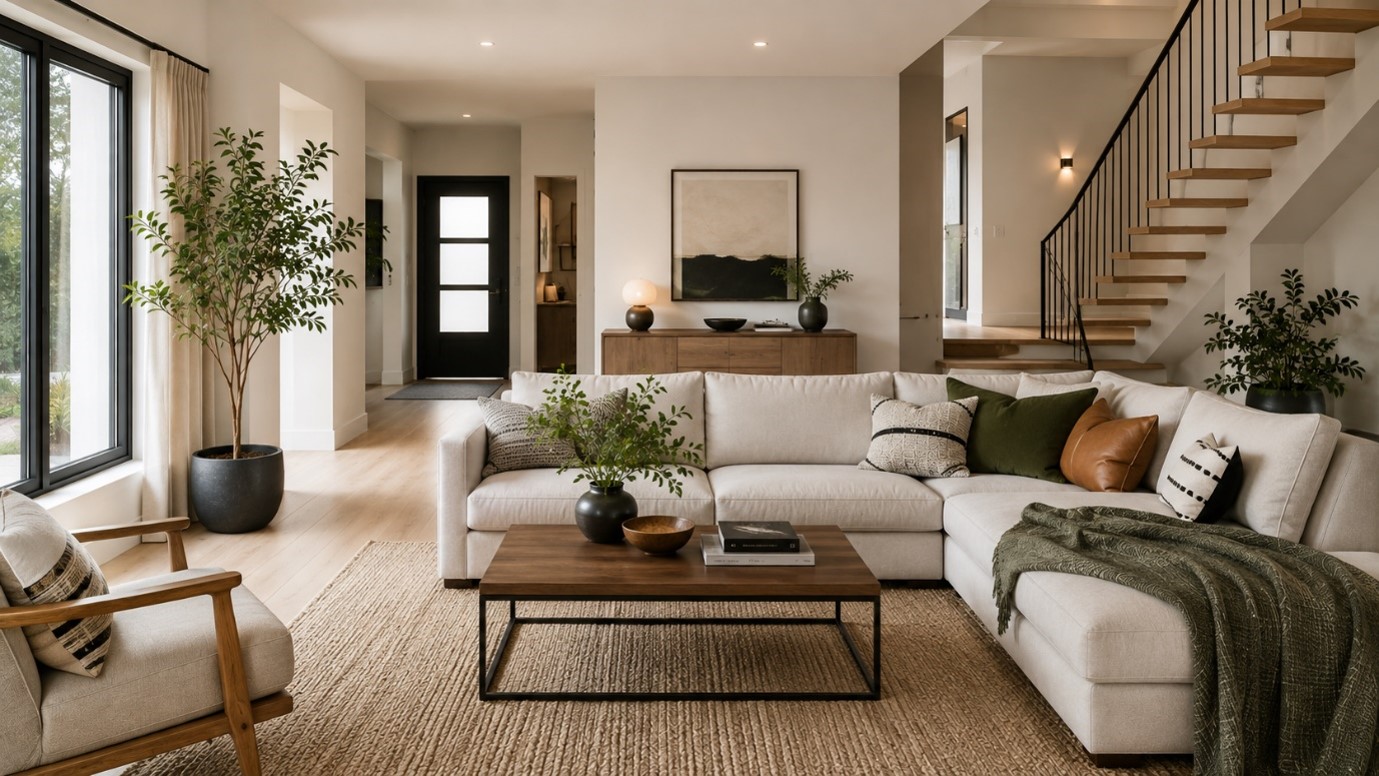
Start with the character of the property. A Victorian terrace, a modern extension and a converted flat each respond differently to colour, scale and materiality. The goal is not to force a style onto the space, but to create an interior that feels natural within it.
A cohesive scheme usually begins with a restrained base palette, then builds interest through texture, tone and contrast. Timber, stone, metal, fabric and paint should work together rather than compete for attention. If every room makes a separate statement, the house can feel disjointed. If everything is too similar, it can feel flat. Balance is what creates a composed, premium finish.
Materials should suit real life
Beautiful finishes still need to perform. Matte surfaces may look elegant but can mark more easily in high-traffic family areas. Natural stone is timeless, though some varieties require more maintenance than porcelain alternatives. Timber flooring brings warmth, but the right specification depends on underfloor heating, footfall and moisture exposure.
This is where practical reassurance matters. Choosing finishes should never feel like guessing. A well-managed renovation process helps you weigh appearance, durability, maintenance and budget together, so the result is not only stylish on handover day but still working hard years later.
Lighting, storage and detailing make the difference
The spaces people respond to most positively are often not the ones with the boldest design moves. They are the ones that feel resolved. That usually comes down to lighting, storage and detail.
Lighting should be layered. Relying on a single central pendant rarely creates the atmosphere or flexibility a room needs. Combine ambient, task and accent lighting so the space works equally well for practical use and evening comfort. This is especially important in open-plan layouts, where lighting helps define zones without introducing physical barriers.
Storage deserves the same level of attention. It should be designed around what you actually own and how you live. Deep drawers, utility cupboards, hallway joinery and integrated bedroom storage can transform how a home functions, but only if planned early enough to sit naturally within the design.
Then there are the details that quietly lift everything: aligned sockets, consistent ironmongery, neat shadow gaps, properly considered skirting profiles and well-placed switches. These choices are easy to overlook at the start and hard to correct at the end.
Bring the plan together before work starts
By the time construction begins, the major decisions should already be coordinated. Layout, finishes, lighting positions, sanitaryware, joinery intent and budget allowances need to align. This does not remove every decision during the build, but it dramatically reduces uncertainty.
For homeowners investing in a premium renovation, that level of preparation is what creates a more predictable and far less stressful experience. It allows the design to be carried through with consistency, gives contractors clear direction, and protects the quality of the final finish. That is one reason clients working with an end-to-end partner such as ARC Global Engineering often feel more in control throughout the process – the design thinking, project planning and delivery are not treated as separate conversations.
The most successful interiors are rarely the ones chasing the latest look. They are the homes planned with care, built around real life, and finished with enough discipline to feel effortless. Our Interior Design Services in London focus on creating spaces that balance functionality, personality, and timeless style. If you start there, the style has a much better chance of lasting.