
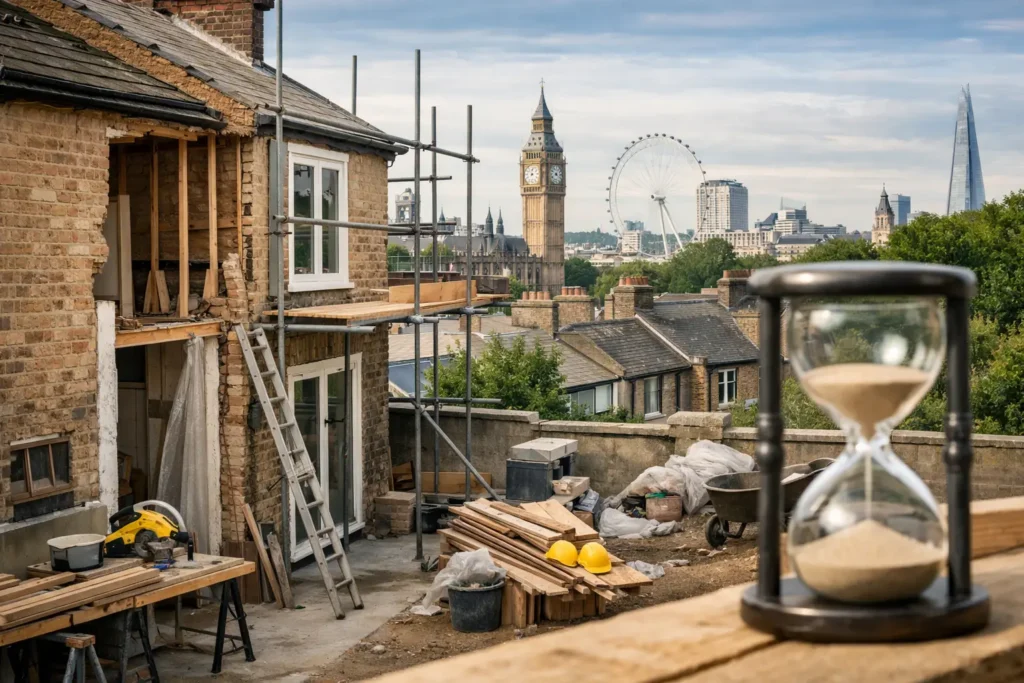
A refurbishment should not feel like an open-ended disruption to family life. Yet one of the first questions homeowners ask – quite rightly – is: how long does house refurbishment take? The honest answer depends on the scale of work, the condition of the property and the decisions made before construction begins. A carefully managed programme, however, turns that uncertainty into a clear, realistic route from first survey to final handover.
For London homes, where access can be tight, properties often contain hidden surprises and permissions may be required, early planning is not a formality. It is what protects the quality of the finish and helps keep your home renovation moving at the right pace.
Typical house refurbishment timelines
A cosmetic refresh, such as decorating, new flooring, lighting updates and selected joinery, may take two to six weeks. This assumes the rooms are structurally sound, materials are available and the property does not require major electrical, plumbing or plastering work.
A kitchen or bathroom refurbishment generally takes four to eight weeks. Bathrooms can be completed more quickly where layouts remain unchanged, while kitchens may take longer because cabinetry, worktops, appliances and specialist trades must be coordinated in the correct order. Moving pipework, removing walls or upgrading outdated services adds time, but can also create a much more functional space for everyday living.
A substantial internal renovation, perhaps involving a new kitchen, bathrooms, reconfigured living areas, bespoke storage and full redecoration, commonly takes three to six months. A whole-house refurbishment with structural alterations, extensive rewiring, plumbing upgrades or a rear extension can take six to 12 months or more.
These ranges cover the construction phase. They do not always include the time needed for design development, surveys, planning permission, party wall matters or ordering long-lead items. For a premium result, those earlier stages deserve as much care as the work on site.
How long does house refurbishment take from first idea to handover?
Homeowners often measure the programme from the day they decide they want a change. In that sense, a refurbishment begins well before the first protective sheet goes down.
The initial consultation, measured survey and concept development may take several weeks. This is the point at which a professional team can understand how you live now, what is not working and what the finished home needs to achieve. For example, a growing family may prioritise a better-connected kitchen-dining space, while a professional couple may want a refined home office or a calm principal bathroom.
Detailed design, specifications and fixed, itemised costing may then take a further few weeks, depending on the complexity of the project and how quickly selections are approved. If planning permission, building control approval or a party wall agreement is needed, allow additional time. In many cases, this preparation runs alongside technical planning and procurement rather than stopping the project entirely.
Once construction starts, the programme should follow a logical sequence: strip-out and enabling works, structural changes, first-fix electrical and plumbing work, plastering, second-fix installations, joinery, decorating and final snagging. The stages can overlap in places, but rushing one trade before the previous work is ready is rarely a shortcut. It usually risks rework and compromises the finish.
The factors that can change your refurbishment programme
No two London properties are the same. Period homes in areas such as Kensington, Hampstead or Clapham can be full of character, but they can also reveal ageing wiring, uneven floors, hidden chimney breasts or previous alterations once work begins. A responsible contractor will allow sensible contingency and communicate clearly if an unforeseen issue affects the programme.
The most common timing variables are the scope of structural work, the condition of existing services, planning or neighbour-related requirements, access restrictions, material lead times and client decisions. Bespoke joinery, natural stone, specialist tiles and made-to-order glazing can all be worth the wait, but they need to be selected early and scheduled properly.
Changing your mind after work has begun is another understandable but significant factor. A new layout, different worktop choice or late request for additional lighting can improve the outcome, but it may affect costs, ordering and sequencing. Good project management does not prevent every change. It makes the implications clear before you commit.
Why bathrooms and kitchens need careful sequencing
Bathrooms and kitchens are compact rooms with a high concentration of trades. A bathroom might involve strip-out, plumbing, electrics, waterproofing, tiling, sanitaryware installation, joinery, decorating and testing. Each phase needs time to cure, set or be inspected before the next one begins.
Kitchens are similarly dependent on sequencing. Walls and floors must be prepared, services positioned accurately, units installed, worktops templated and fitted, then appliances and finishing details completed. A made-to-measure stone worktop, for instance, cannot be templated until the cabinetry is in place. This is why a programme based on realistic dependencies is far more valuable than an optimistic promise.
What a well-managed programme looks like
A dependable timeline is not simply a start date and an estimated completion date. It is a working plan that identifies key decisions, orders materials at the appropriate stage, coordinates each trade and gives the client regular visibility of progress.
Before work begins, your contractor should be able to explain what is included, what is excluded, which items are subject to lead times and how unexpected findings will be managed. A fixed and itemised quote provides clarity, while a detailed programme gives everyone a shared understanding of the route ahead.
During the build, communication matters just as much. You should know what has been completed, what is scheduled next and whether any decisions are required from you. This is particularly valuable if you are living in the property during the refurbishment. A thoughtful team can phase works, protect occupied areas and plan temporary arrangements around essential spaces wherever practical, although full access restrictions may sometimes be necessary for safety and efficiency.
At ARC Global Engineering, the focus is on making home renovations feel organised from the outset: aligning design, procurement, construction and finishing under one carefully managed process. That approach gives homeowners greater confidence in both the timetable and the craftsmanship behind it.
How to keep your renovation on schedule
The best way to reduce delays is to make key choices before the build starts. Confirm the layout, approve the specification and select principal finishes early enough for ordering. This does not mean every cushion or accessory must be chosen in advance. It means the items that influence construction – kitchens, bathrooms, tiles, sanitaryware, flooring, doors, lighting and bespoke joinery – should be properly considered.
It also helps to distinguish between a deadline and a desired completion date. If you are planning around a new baby, a school term, a tenancy end date or hosting family at Christmas, mention it at the first consultation. A professional renovation partner can assess whether the target is realistic and suggest phasing or alternative solutions where needed.
Finally, retain a sensible contingency in both time and budget. Older homes do not always reveal their full story until finishes are removed. Allowing room to resolve genuine issues properly is not a failure of planning. It is part of delivering a home that looks exceptional and performs well long after the final coat of paint has dried.
A successful refurbishment is not the one completed at the fastest possible speed. It is the one that reaches handover with the details considered, the workmanship finished properly and your home ready to support the life you want to live in it.