
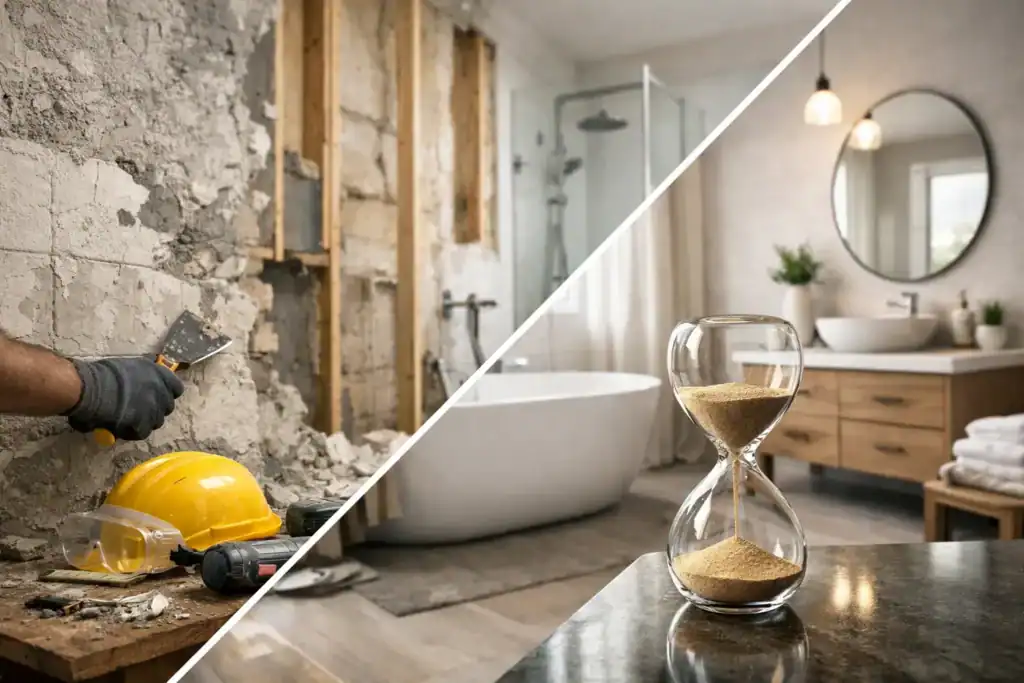
If you are planning a bathroom upgrade, one of the first questions you will ask is how long does a bathroom renovation take. The honest answer is that most bathroom renovations take between two and four weeks on site, but the full process can stretch longer once design decisions, ordering, approvals and final finishing are included.
That gap matters. Homeowners often picture the build phase only, when in reality the smoothest projects are won before anyone lifts a tile. A well-managed renovation feels faster not because corners are cut, but because every trade, delivery and decision is lined up properly from the outset.
How long does a bathroom renovation take in real terms?
For a straightforward bathroom refurbishment, the on-site works typically fall into a two to three week window. That usually covers strip-out, plumbing and electrical first fix, plastering or wall preparation, waterproofing, tiling, second fix, decorating and final snagging.
A more complex renovation can take four to six weeks. This is common when the layout is changing, structural work is involved, bespoke joinery is being fitted, underfloor heating is added, or premium finishes need extra care during installation. Period homes in London can also introduce hidden complications once walls and floors are opened up.
The wider project timeline is often longer than the build itself. Before work starts, you may need time for surveys, design development, selecting finishes, obtaining materials and confirming labour schedules. If specialist tiles, brassware or made-to-measure furniture are on longer lead times, the programme can shift before the first day on site.
The typical bathroom renovation timeline
Every project differs, but most follow a similar sequence. Understanding each stage helps explain why a realistic programme matters.
Planning and design
This stage can take anywhere from one to four weeks, sometimes longer if you are refining layout options or choosing high-end finishes. It includes measuring the room, developing the design, confirming the sanitaryware, tiles, lighting and storage, and making sure everything works as a whole.
This is also the point where avoidable delays are either removed or quietly built into the future. If decisions are rushed, missing items and last-minute substitutions can slow the site phase considerably.
Ordering materials
Once the design is signed off, products need to be ordered and checked. Off-the-shelf items may arrive quickly, but specialist tiles, custom vanity units and premium brassware can add several weeks. A dependable contractor will usually want key materials on hand, or at least delivery dates confirmed, before demolition begins.
Strip-out and first fix
The first few days on site are often the messiest. Existing sanitaryware, tiles, flooring and fittings are removed, then plumbing and electrical works are adjusted to suit the new layout. If there are hidden issues such as rotten subfloors, leaking pipework or poor historic workmanship, this is when they tend to appear.
Preparation, waterproofing and surfaces
Walls and floors are then prepared for the new installation. Depending on the condition of the room, this may involve levelling, boarding, plastering or making good. Waterproofing must be completed properly, especially in wet areas, and this cannot be rushed if you want a durable finish.
Tiling and fitting
Tiling often takes longer than clients expect, particularly with large-format tiles, patterned layouts, mitred edges or natural stone. Once surfaces are complete, the sanitaryware, taps, shower fittings, screens, lighting and cabinetry are installed.
Finishing and snagging
The final stage includes decoration, sealing, testing and quality checks. Small adjustments are common at this point. A professional finish comes from taking this last stage seriously rather than treating it as an afterthought.
What affects how long a bathroom renovation takes?
The biggest factor is complexity. Replacing like-for-like fittings in the same positions is much quicker than relocating a shower, moving a soil pipe or redesigning the room around better storage and circulation.
Property type also plays a part. In older homes, especially across parts of London where period housing stock is common, bathrooms may hide uneven walls, tired pipework and flooring that needs strengthening before new finishes can go down. In flats, access restrictions, parking, delivery windows and building management rules can also influence the programme.
Choice of finish matters more than many people realise. Porcelain tiles laid in a standard brick pattern are one thing. Bookmatched stone, niche lighting, recessed storage, wall-hung sanitaryware and bespoke vanity joinery are another. The result is more refined, but it needs careful sequencing and skilled installation.
The final factor is project management. Bathrooms are compact spaces where several trades need to work in a precise order. If the plumber, tiler, electrician and decorator are not properly coordinated, even a simple renovation can drift. Good management keeps the process moving without compromising quality.
Why some bathroom renovations overrun
Most delays do not come from the visible work. They come from decisions that were not fully resolved before the build began.
One common issue is incomplete product selection. If the basin has been chosen but the trap, waste, mixer, mirror size or vanity dimensions have not, the installer can end up waiting for critical pieces. Another is discovering site conditions that were impossible to confirm until strip-out, such as damaged walls or outdated electrics.
There is also a trade-off between speed and finish quality. Faster is not always better if adhesives have not cured, waterproofing has been rushed or silicone has been applied before surfaces are fully ready. In a premium bathroom, the details are what make the space feel calm, polished and built to last. Those details need time.
How to keep your bathroom renovation on schedule
The best way to shorten the project is to prepare thoroughly before it starts. Finalise the layout, choose all fixtures and finishes early, and make sure lead times are checked before the programme is confirmed.
It also helps to work with a contractor who offers proper planning and coordination rather than simply supplying trades. An end-to-end service tends to reduce delays because the design, ordering, sequencing and installation are handled as one process. For busy households, that structure can make the experience far less disruptive.
If you only have one bathroom, discuss this early. Temporary arrangements, working hours and access plans should be agreed in advance so the household can function while works are underway. A good renovation partner will treat the logistics of living through the project as seriously as the build itself.
A realistic timeframe for most homeowners
So, how long does a bathroom renovation take if you want the answer in plain English? For most homeowners, a standard bathroom renovation takes around two to four weeks on site, with additional time before that for design, selections and procurement.
If the room is being reconfigured, if the property is older, or if the finish level is more bespoke, four to six weeks is a more realistic expectation. That may sound longer than the quick estimates sometimes quoted, but realistic planning is what protects both quality and peace of mind.
For homeowners investing in a more refined result, the shortest timeline is rarely the best measure of value. What matters more is whether the work is well organised, clearly communicated and completed to a standard you will still be pleased with years from now.
A bathroom renovation should improve daily life, not just refresh a room. When the project is planned carefully, timed properly and delivered with craftsmanship, the wait feels worthwhile from the moment you step into the finished space.