
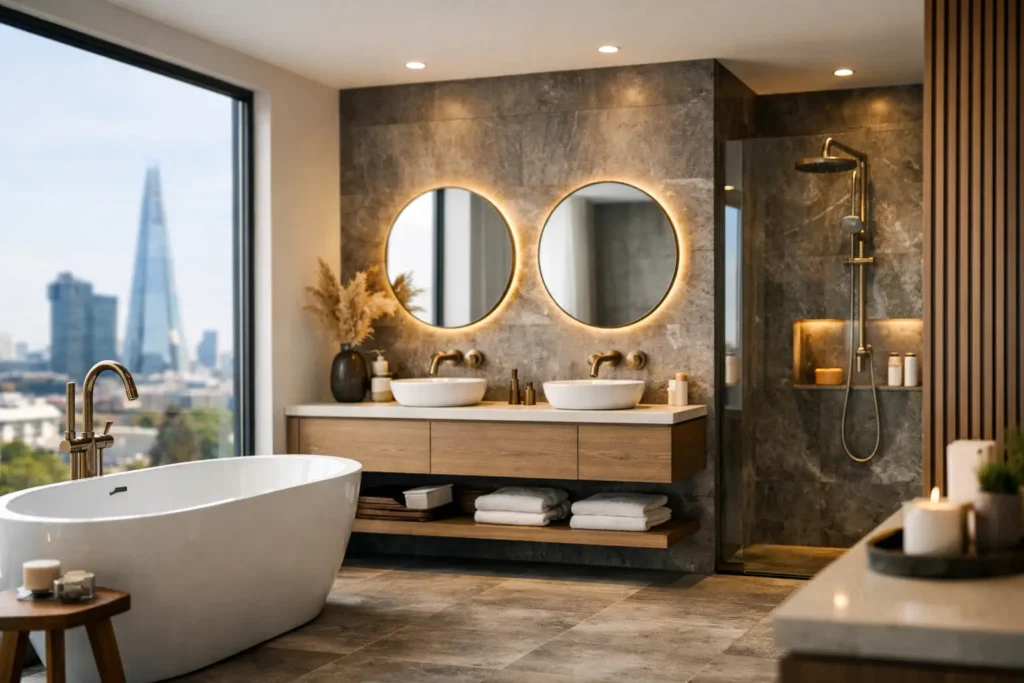
A beautiful bathroom should do more than photograph well. It needs to work during a busy weekday morning, feel restorative at the end of the day, and continue to suit your household as routines change. The bathroom design trends 2026 homeowners are responding to are less about novelty and more about creating calm, highly considered spaces with lasting materials, practical storage and a sense of personal comfort.
For London homes in particular, the most successful schemes balance visual impact with the realities of compact footprints, varied water pressure and the need for dependable construction. The aim is not to chase every new finish. It is to select ideas that improve the way the room looks, feels and functions for years to come.
Bathroom Design Trends 2026: Quiet Luxury With Purpose
The move away from stark, show-home bathrooms is gathering pace. In its place is a warmer, more layered approach often described as quiet luxury. Think natural stone, timber-effect finishes, softened lighting and fittings chosen for their quality rather than their shine.
This does not mean every bathroom needs to be beige. Deep olive, clay, muted blue and rich plum tones are appearing in tiles, painted finishes and vanity units, bringing depth without making the room feel heavy. These colours work especially well when paired with warm white sanitaryware, brushed brass or bronze-toned brassware, and gentle pools of light.
The key is restraint. A premium result usually comes from using fewer materials more confidently, rather than introducing several statement surfaces into one room. For example, a beautifully veined porcelain on the floor and shower walls can sit alongside a simple painted vanity, allowing texture and proportion to do the work.
Spa-Led Bathrooms That Still Feel Like Home
Homeowners increasingly want their bathroom to offer a genuine pause from a fast-paced day. In 2026, this is translating into spa-led features that are comfortable and usable, not simply decorative. Walk-in showers with generous glass screens, ceiling shower heads, built-in benches and deep freestanding baths remain desirable where the space allows.
A wet-room style layout can make a smaller bathroom feel more open and easier to maintain, particularly when the floor levels and drainage are planned correctly from the outset. However, it is not automatically the right answer for every household. Families with young children may prefer a shower tray with a subtle edge to contain splashes, while a large open shower area can require careful heating and ventilation design to prevent the room feeling cold or damp.
Wellness is also moving into the less obvious details. Heated flooring, towel rails positioned where they are genuinely useful, dimmable lighting and good extraction all make a noticeable difference to daily comfort. These are the features that turn a striking room into a bathroom people enjoy using.
Layered Lighting Replaces a Single Ceiling Fitting
One central downlight is rarely enough. The best bathroom schemes use layers: clear task lighting around the mirror, ambient lighting for a relaxed evening atmosphere and discreet illumination for shelving, niches or under-vanity areas.
Backlit mirrors remain popular, but the more enduring choice is lighting that flatters rather than casts harsh shadows. A combination of side lighting and a softly lit mirror is often more practical for shaving, skincare and make-up. Lighting must also be specified for the correct bathroom zone, so it pays to coordinate the design and installation early rather than treating it as a final finishing touch.
Natural Texture, Made Practical
The desire for natural materials is shaping bathroom finishes, but practicality remains central. Stone-look porcelain, fluted tiles, microcement-style surfaces and timber-effect vanities offer tactile warmth while standing up better to moisture and everyday cleaning than many natural alternatives.
Large-format porcelain is a strong choice for both contemporary and classic homes. With fewer grout lines, it can create a more expansive appearance and reduce cleaning time. The trade-off is that large tiles demand accurate wall preparation and experienced installation. In a period property, where walls and floors may not be perfectly true, the groundwork behind the finish matters as much as the tile itself.
Fluted and ribbed surfaces are another notable direction, appearing on vanity fronts, shower glass and feature tiles. They add depth without relying on a loud pattern. Used sparingly, they make a compact room feel considered. Used across every surface, they can become visually busy and more demanding to clean, so a single focal point is usually enough.
Storage Becomes Part of the Design
A clear basin area is one of the quickest ways to make a bathroom feel calmer. That is why integrated storage is no longer an afterthought. Wall-hung vanity units, recessed mirrored cabinets, shower niches and tall, slimline cupboards are being designed into layouts from day one.
Floating furniture is particularly useful in smaller London bathrooms because it reveals more floor area and makes the room feel lighter. Drawers tend to be more efficient than cupboards for toiletries, but their internal layout needs consideration. A shallow top drawer can accommodate daily essentials, while deeper storage below suits towels and cleaning products.
Recessed niches are now expected in many shower renovations, offering a clean alternative to hanging caddies. Their placement should be planned around tile sizes and waterproofing details, not added halfway through the build. A niche that is well proportioned and properly lit can look effortless. One that interrupts an awkward tile cut can undermine an otherwise refined finish.
Softer Shapes and More Individual Character
After years of sharp-edged minimalism, rounded forms are bringing a more relaxed character to bathroom design. Curved mirrors, arched shower screens, oval basins and softly profiled vanity units reduce the hard lines often found in compact rooms.
This trend works well in period homes as well as modern extensions, because it can bridge traditional architecture and contemporary fittings. An antique brass tap with a gently curved basin can feel at home in a Victorian terrace, while a simple arched mirror adds softness to a newly reconfigured family bathroom.
Individuality is also coming through in colour and finish combinations. Chrome remains a sensible, timeless choice, but warmer metals continue to gain ground. Brushed nickel is versatile and understated; brushed brass can bring a richer, more decorative note. Whichever finish you choose, consistency matters. Matching the tapware, shower controls, flush plate and accessories creates a more resolved result than mixing metals by accident.
Designing for Water Efficiency Without Compromise
Sustainability in bathroom design is becoming more practical and less performative. Water-saving toilets, aerated taps and efficient shower fittings can reduce consumption without making the experience feel inadequate. The specification should always account for the home’s existing water pressure and heating system, though. A shower head that performs beautifully in a high-pressure system may disappoint where pressure is limited.
Durability is equally important. Choosing fittings with readily available replacement parts, robust concealed valves and surfaces that can be maintained over time is a more responsible approach than selecting a cheaper item likely to fail prematurely. Quality installation also protects the investment, especially in bathrooms above living spaces where waterproofing and pipework must be handled with care.
Plan the Layout Before Choosing the Finishes
The most polished bathrooms begin with a layout that supports real life. Door swings, towel access, cleaning space, storage needs and sightlines all deserve attention before tiles and brassware are selected. A statement bath may look impressive, but it can be the wrong choice if it leaves no practical place for family storage or makes the room difficult to move around.
For a renovation to feel stress-free, design decisions need to connect to a realistic programme, clear scope and coordinated trades. ARC Global Engineering approaches bathroom upgrades as a managed transformation, bringing design planning, construction and finishing together so that every decision supports the final result.
The strongest 2026 bathrooms will not be defined by one fashionable tile or tap. They will feel warm, ordered and personal, with every detail chosen to make daily life that little bit easier. Start with how you want the room to serve your home, then let the finishes give that vision its character.