
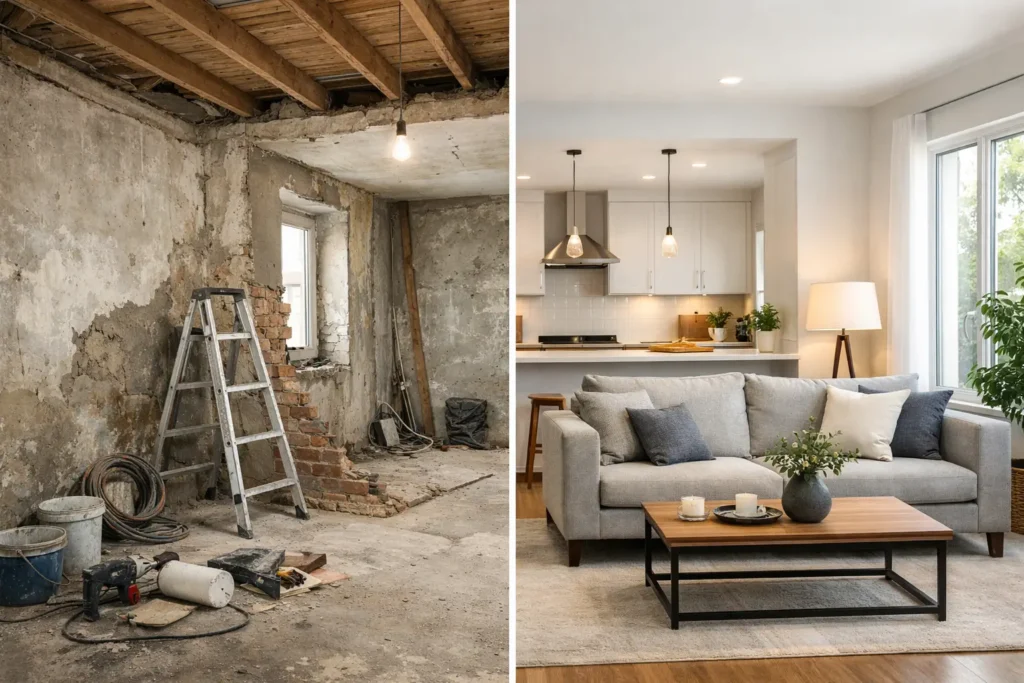
A new kitchen can be a straightforward upgrade, or it can expose ageing pipework, uneven floors and a layout that no longer works for family life. That is why the choice between refurbishment vs renovation matters long before finishes are selected. The terms are often used interchangeably, but the real difference lies in the scale of change, the condition of the property and the outcome you want from the investment.
For homeowners, getting the definition right helps create a clearer brief, a more realistic budget and a delivery plan with fewer surprises. It also makes it easier to decide whether a room needs a considered refresh or a complete reworking.
What is the difference between refurbishment and renovation?
In residential projects, refurbishment usually means improving the appearance, comfort and performance of an existing space without fundamentally changing its structure or layout. It may involve replacing tired finishes, upgrading fittings, decorating, installing new flooring, refreshing joinery or modernising a bathroom suite within the same footprint.
Renovation is generally broader. It can include refurbishment work, but often goes further by repairing, restoring or altering significant parts of the home. A renovation may involve reconfiguring rooms, replacing services, correcting defects, improving insulation, opening up living spaces or carrying out structural works.
There is no single legal definition that every contractor, architect or homeowner uses. A project described as a “kitchen refurbishment” by one person might be called a “kitchen renovation” by another. Rather than relying on the label, focus on the scope: what stays, what changes, what needs to be brought up to standard and what will be uncovered once work begins.
When refurbishment is the right choice
Refurbishment suits homes with a sound layout and good underlying condition, where the main aim is to improve how a space looks and feels. It is often the right route when you like the room’s proportions but the finishes no longer reflect your taste, the kitchen feels dated, or a bathroom needs a more polished and practical finish.
A well-planned refurbishment can still be transformative. New cabinetry, worktops, lighting and flooring can change the experience of a kitchen without moving walls. In a living room, bespoke storage, improved lighting and carefully selected finishes can make the room calmer, more useful and better connected to the way you live.
Because the existing arrangement remains largely intact, refurbishment can be less disruptive than a full renovation. It may also be easier to programme, particularly when services do not need extensive alteration. That said, it should never be treated as simply cosmetic. Older London homes can conceal electrical, plumbing, damp or ventilation issues behind otherwise presentable surfaces. Proper surveys and careful allowance planning remain essential.
When a renovation offers better long-term value
Renovation is usually the stronger choice when a home has deeper functional problems. Perhaps the kitchen is separated from the family space, a bathroom has recurring moisture issues, bedrooms lack storage, or the ground floor no longer supports work, entertaining and everyday routines. In these cases, replacing finishes alone can leave the core problem untouched.
A renovation creates the opportunity to improve the fabric and flow of the property together. It may include relocating a kitchen, creating an open-plan kitchen-dining area, forming an additional shower room, upgrading heating and electrics, or changing internal walls to make space work harder. For period properties, it can also involve sympathetic repair alongside modern improvements in comfort and efficiency.
The trade-off is greater complexity. Structural changes may require calculations and specialist input. Building Regulations approval can apply to alterations affecting structure, drainage, electrics, insulation, ventilation and fire safety. Depending on the property and proposed works, planning permission, leaseholder consent or party wall agreements may also need to be addressed before construction starts.
A larger scope takes more coordination, but it can prevent the frustration of investing in beautiful finishes around an inefficient layout. For a family intending to stay in their home for years, a properly managed renovation can provide better value than a sequence of short-term upgrades.
Refurbishment vs renovation: comparing cost and disruption
Cost is rarely determined by the name of the project. It is shaped by the amount of labour, the condition of the building, the specification, access, the extent of service changes and the level of bespoke work involved.
Refurbishment can be more cost-effective where the room layout, plumbing locations and electrical infrastructure are retained. However, premium finishes, made-to-measure joinery and high-quality fixtures still require a meaningful budget. A refined result depends on accurate installation and meticulous finishing, not simply on purchasing expensive materials.
Renovation tends to require a larger investment because more trades and decisions are involved. Removing walls, moving plumbing, rewiring, replacing subfloors or addressing hidden defects all add cost and time. In return, the work can improve the home at a more fundamental level, making daily life easier and potentially avoiding another major project in a few years.
Disruption follows a similar pattern. A single-room refurbishment may allow you to remain in the property with sensible protection and phased working. A whole-home renovation, or a project affecting the kitchen and main bathroom simultaneously, may require a temporary living plan. Honest discussion at the outset is far better than discovering midway through that the household routine is no longer practical.
Start with the outcome, not the terminology
The most useful question is not, “Do I need refurbishment or renovation?” It is, “What does this home need to do differently?” A clearer outcome leads to a clearer scope.
For example, if your aim is to give a usable but dated bathroom a more luxurious look, refurbishment may be enough. If the room is cramped, poorly ventilated and arranged around outdated pipework, a renovation may deliver the lasting improvement you are looking for. Likewise, a kitchen can be refreshed with new doors and worktops, but a growing family may benefit more from redesigning the layout, storage and connection to the garden.
Consider how long you plan to remain in the property, too. If you are preparing a home for sale, targeted refurbishment can make a strong impression without over-investing. If this is your long-term home, it can be sensible to address performance, layout and services properly while the space is already being opened up.
Planning a project with confidence
A successful project begins with a detailed conversation about your priorities, budget range, lifestyle and non-negotiables. A professional team should help distinguish between essential works and optional upgrades, then explain how each decision affects cost, timing and the final result.
An itemised quotation is particularly valuable when weighing up refurbishment against renovation. It shows where the investment is going and makes it easier to compare options, such as retaining an existing layout versus moving plumbing or choosing standard storage versus bespoke joinery. It also helps establish a realistic contingency for older properties, where conditions behind walls or beneath floors may not be known until work starts.
Project management matters just as much as design. A coordinated programme brings trades, materials, inspections and client decisions together in the right order. It protects quality, reduces avoidable delays and gives homeowners a single, reliable point of communication throughout the build.
For clients across London and the surrounding areas, ARC Global Engineering approaches both refurbishments and renovations as carefully managed home transformations. The goal is not simply to complete works, but to create spaces that feel considered, perform well and reflect the way you want to live.
The best route is the one that solves the right problem. Whether that means a focused refurbishment or a more ambitious renovation, begin with an honest view of the home you have and a clear picture of the home you want to enjoy every day.