
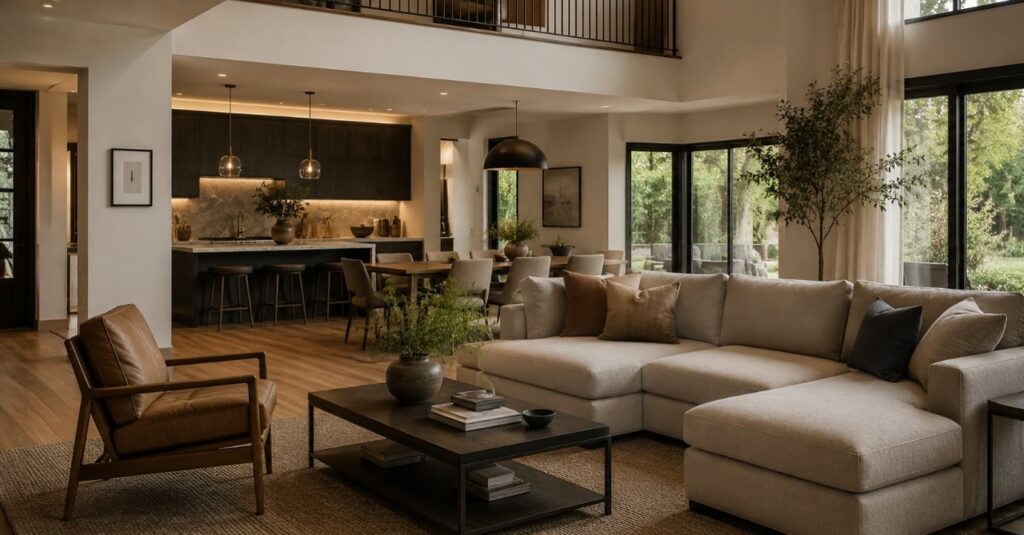
A year ago, many homeowners were still asking for interiors that looked immaculate in photographs. Now the conversation is different. The most relevant home interior design trends 2026 are not about show-home perfection. They are about rooms that feel calm, well-planned and genuinely easy to live in, with quality choices that still look right years from now.
That shift matters if you are renovating rather than simply redecorating. Trends can be useful, but only when they translate into better layouts, smarter storage, stronger materials and a finish that suits how your household actually lives. For families, busy professionals and long-term homeowners, the goal is not to chase every new idea. It is to invest in a home that feels current, refined and practical at the same time.
Home interior design trends 2026 are moving towards warmth
The biggest change is a move away from interiors that feel stark or overly engineered. Cooler greys, ultra-sharp contrast schemes and spaces that lean heavily on one-note minimalism are giving way to warmer palettes and softer visual balance. Think clay, taupe, putty, mushroom, chalky greens, muted terracotta and richer timber tones.
This does not mean homes are becoming traditional in a heavy or decorative sense. Instead, they are becoming more grounded. Walls, cabinetry, flooring and textiles are being chosen to create depth without feeling busy. In practical terms, that often means fewer hard colour jumps and more tonal layering across a room.
For a kitchen or open-plan living space, this works particularly well because warmth makes larger areas feel more settled. It is also forgiving. A softer palette tends to cope better with changing light, everyday wear and the reality of family life than a scheme built around cold white surfaces and high contrast finishes.
Layouts are being designed for flexible living
One of the most significant home interior design trends 2026 is not decorative at all. It is spatial. Homeowners still want open-plan flow, but there is far less appetite for rooms that do everything at once without structure.
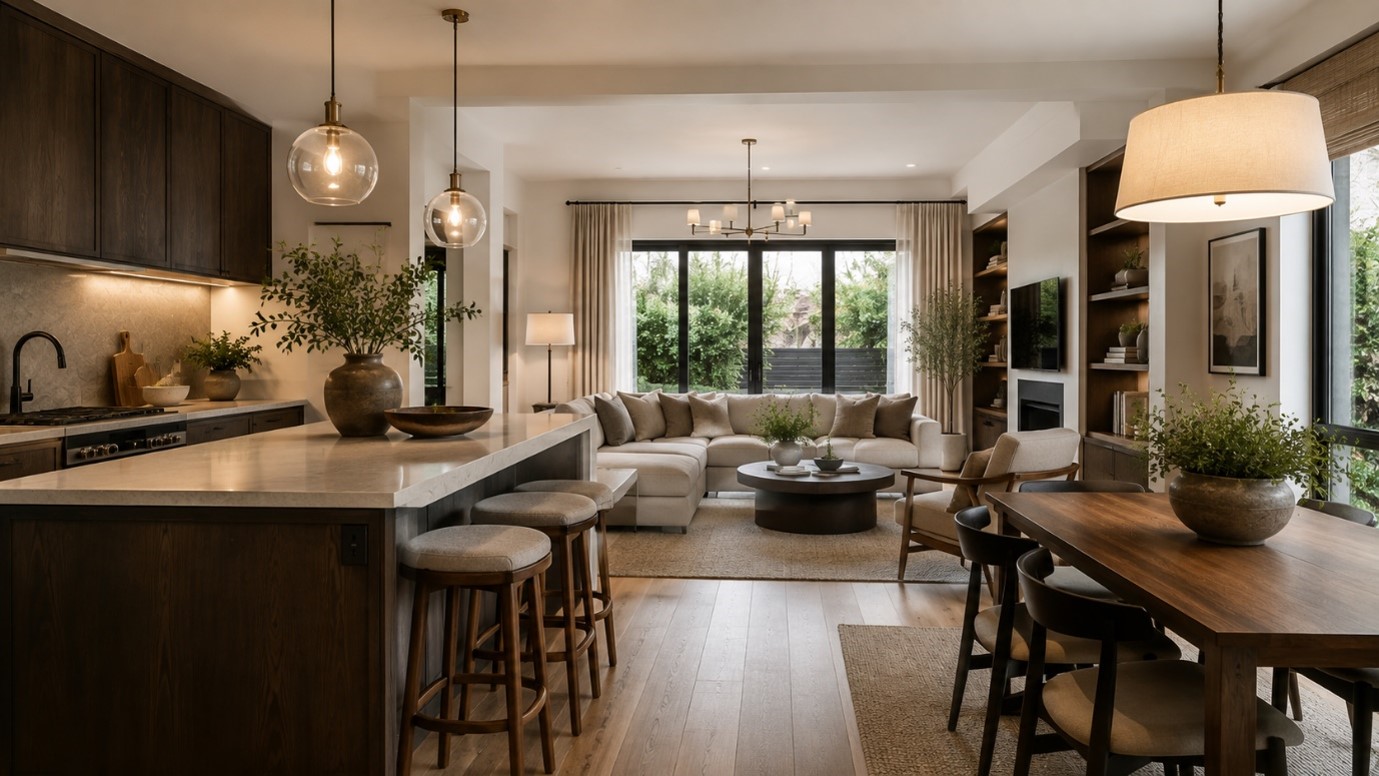
That means better zoning rather than complete separation. Kitchen islands are being used more deliberately to define cooking and social areas. Glazed partitions, pocket doors, slatted dividers and changes in flooring or ceiling treatment help create function without making a home feel closed in.
This is especially relevant in period properties and family homes where every square metre has to work harder. A single large room can be beautiful, but if it offers no acoustic control, poor storage and nowhere to work, read or retreat, it quickly feels less luxurious than it looks. The direction for 2026 is thoughtful openness – connected spaces with a clear sense of purpose.
Kitchens are becoming quieter and more architectural
Kitchens remain the centrepiece of many renovation projects, but the aesthetic is maturing. Handleless gloss units and highly reflective finishes are making room for cabinetry with more texture, depth and craftsmanship. Fluted details, slim framed fronts, timber veneers, painted finishes and natural-looking stone are all gaining ground.
What is changing most is the way the kitchen sits within the wider interior. Rather than standing apart as a statement room, it is being integrated into the overall architecture of the home. Appliances are concealed more carefully. Extract solutions are less visually dominant. Utility areas and pantry storage are being planned from the outset so the main room stays composed.
There is a practical trade-off here. Some of the most refined kitchens require more bespoke planning and a higher level of coordination between design, electrics, lighting and installation. Done properly, the result feels effortless. Done poorly, it can look expensive but function awkwardly. This is where structured project delivery becomes as important as design taste.
Materials that feel authentic are winning
Surfaces are moving away from anything that looks overtly artificial. Porcelain still has its place, particularly where durability is a priority, but homeowners are increasingly drawn to finishes with texture and variation. Natural stone, timber, limewashed walls, brushed metals and tactile fabrics all support the more grounded direction of current interiors.
That said, material choice should always be balanced with lifestyle. A family kitchen may benefit from a highly durable engineered worktop even if natural marble has more visual softness. In a principal bathroom, genuine stone may be worth the investment for the atmosphere it creates. Good design is rarely about choosing the most expensive option. It is about choosing the right one for the room, the user and the level of maintenance that feels realistic.
Bathrooms are shifting from luxury look to luxury feel
Bathrooms in 2026 are becoming less about hotel-style gloss and more about comfort, calm and longevity. The most successful schemes use fewer finishes, better lighting and stronger detailing. Large-format tiles, brushed brass or bronze fittings, soft wall colours, integrated storage and walk-in showers continue to appeal, but the overall mood is less showy.
There is also more interest in creating a proper sense of retreat. That may mean a bath positioned to feel intentional rather than squeezed in, underfloor heating that adds everyday comfort, or layered lighting that works at 6am as well as 10pm. These are not headline features, yet they often define how luxurious a room really feels.
For many homeowners, this is where trend and investment meet. Bathrooms are expensive to alter once complete, so there is value in choosing a scheme that feels current without relying on anything too niche. A refined, warm, well-lit bathroom will usually outlast a more fashion-led design.
Storage is now part of the design, not an afterthought
One of the clearest signs of a well-considered renovation is that the home stays usable when life gets busy. That is why integrated storage is becoming central to interior planning. Bespoke joinery, built-in media walls, boot room cabinetry, understairs solutions and fitted wardrobes are being treated as design features in their own right.
This trend reflects a wider truth. Beautiful rooms are easier to maintain when they have a place for everything. Clutter disrupts even the best-designed interior, so storage is no longer something to be solved at the end of a project.
For households renovating for the long term, tailored storage often delivers more day-to-day value than a purely decorative upgrade. It improves the way the home functions, supports cleaner visual lines and makes open-plan spaces feel calmer. It also allows premium finishes to shine because there is less competition from visible everyday mess.
Lighting is becoming softer and more layered
If there is one detail that separates an average renovation from a polished one, it is lighting. The move in 2026 is away from relying on a single grid of downlights and towards layered schemes that combine task, accent and ambient lighting.
Wall lights, concealed LED details, joinery lighting, pendants over islands and dining areas, and low-level lighting in bathrooms or hallways all help create a more considered atmosphere. This does require planning early, especially where ceilings, cabinetry and wiring are involved, but the payoff is substantial.
Good lighting supports every other finish in the room. It makes materials look richer, improves comfort and gives spaces more flexibility from day to evening. It is one of the most worthwhile places to invest because the benefit is immediate and lasting.
Sustainable choices are becoming more practical
Sustainability is still influencing design, but homeowners are approaching it in a more grounded way. Rather than selecting materials purely for trend value, many are focusing on longevity, efficiency and reduced waste. That can mean restoring original features where possible, choosing durable finishes that do not need frequent replacement, or improving insulation and glazing as part of a wider interior project.
This practical approach makes sense. A home that performs better, lasts longer and needs fewer cosmetic updates is often the more sustainable option. It is also the more cost-effective one over time.
For a renovation company such as ARC Global Engineering, this is where careful planning matters most. Sustainable decisions deliver the best results when they are integrated into the full scope of works, not added in isolation once the design is already fixed.
The real trend is confidence in the choices you keep
The most successful interiors in 2026 will not be the ones that include every current idea. They will be the ones that know what to leave out. A carefully planned extension, a kitchen that feels connected to the rest of the house, a bathroom that starts every day well, and storage that makes daily life easier will always outlast trend-led styling.
If you are renovating this year, the smartest approach is to treat trends as signals rather than rules. Use them to understand where design is heading, then shape those ideas around your property, your routines and the standard of finish you want to live with for years. Professional Kitchen Renovation Services in London can help transform these ideas into a practical, functional space that suits your lifestyle. The right home should not just look current when the works are complete. It should keep feeling right long after the dust has settled.