
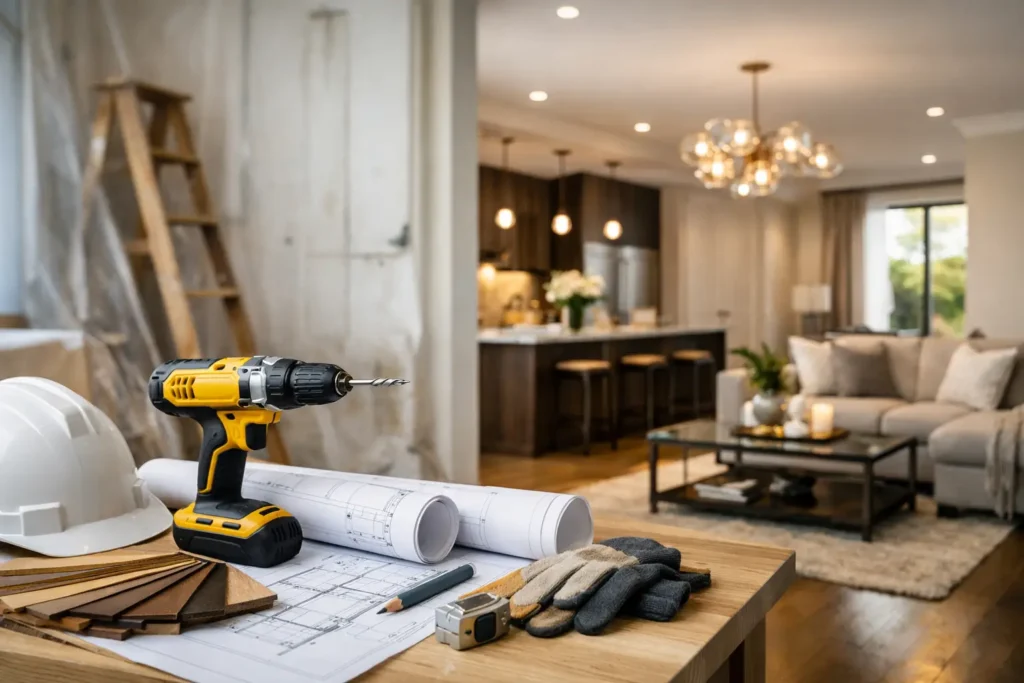
A premium renovation is rarely defined by one statement finish or a larger budget alone. It is the confidence that every decision – from the new kitchen layout to the final paintwork – has been considered as part of a coherent whole. This guide to premium home renovation is designed for homeowners who want a home that works beautifully for everyday life, while being delivered with the clarity and care a significant investment deserves.
Whether you are reconfiguring a Victorian terrace in South London, upgrading a period flat in Kensington or adding a garden room in Surrey, the same principle applies: exceptional results begin long before construction starts.
Start with the life you want to live
The most successful renovations are shaped by lifestyle rather than a collection of individual room ideas. A growing family may need a kitchen that supports busy mornings, better storage and a sociable dining space. A professional couple may prioritise a calm principal suite, a dedicated home office or a more refined entertaining area. In either case, the brief should explain how the house needs to feel and function, not simply what needs replacing.
Consider the moments that currently create friction. Perhaps the hallway lacks practical storage, the bathroom is cramped at peak times, or the kitchen isolates the person cooking from everyone else. These are often more useful starting points than deciding on a particular worktop or tile.
It also helps to distinguish between essential changes and desirable additions. Structural alterations, improved insulation, electrical upgrades and plumbing work may not be as visually immediate as new cabinetry, but they are often the foundations of a lasting renovation. A well-planned project protects the building’s performance as carefully as it improves its appearance.
Build a clear brief before choosing finishes
A detailed brief gives your project direction and reduces costly changes later. It should identify the spaces being renovated, the practical requirements, preferred aesthetic, target investment level and any non-negotiables. If maintaining access to part of the home during works is important, include that from the outset. If the project must be completed before a school term, family event or move-in date, it needs to inform the programme.
In London homes, space planning can have a greater impact than adding square footage. Reworking a poorly arranged ground floor can create a generous sense of flow without the cost and disruption of a major extension. On the other hand, where the plot and planning position allow, an extension or bespoke garden room may provide the extra room that makes the whole property function better.
Avoid locking in every decorative decision too early. A premium project benefits from a clear design direction, but some choices should be tested against the final layout, natural light and material samples. Timber tones, stone veining and paint colours can look very different in a showroom than they do in your own home.
Design for proportion, storage and light
Luxury living is often experienced through the details that make a room effortless to use. This includes circulation space around an island, well-positioned sockets, layered lighting, integrated storage and joinery that suits the proportions of the room. These decisions are not glamorous in isolation, but together they create the composed, comfortable feel people associate with high-quality homes.
Natural light deserves the same attention. New rooflights, glazed doors or internal openings can transform a dark layout, yet they need to be balanced with privacy, overheating and the character of the property. In a period home, the right solution may be subtle rather than dramatic. It depends on the building, the orientation and how the room is used throughout the day.
Plan the budget around the whole project
A realistic budget should account for more than visible finishes. A refined kitchen, for example, may also require alterations to services, flooring repairs, plastering, lighting design, decorating and specialist installation. Bathroom costs can similarly rise where waterproofing, ventilation, pipework or layout changes are needed.
The value of an itemised quotation is that it allows you to understand what has been included and where choices may affect cost. A low initial figure that excludes essential work is not a saving if it creates uncertainty once the project is underway. Premium renovation should feel controlled, with scope, allowances and any assumptions discussed clearly before work begins.
Set aside an appropriate contingency for unforeseen conditions, particularly in older properties. Opening up walls or floors can reveal issues that could not reasonably be confirmed beforehand, such as historic water damage, outdated wiring or uneven subfloors. Contingency is not a sign of poor planning. It is a sensible safeguard that helps decisions remain measured if the unexpected appears.
Spend where it improves daily use
Not every element needs to be the most expensive option available. The right investment is usually the one that improves longevity, performance or the way you use the space. Quality sanitaryware, durable flooring, well-built cabinetry, reliable appliances and properly specified lighting tend to earn their place over time.
Conversely, a highly bespoke feature may not be necessary if a carefully selected standard alternative delivers the same result. The goal is not excess. It is a home where materials feel good, fittings perform well and the finish remains considered years after handover.
Choose a team that can manage the detail
A renovation involves many moving parts: design development, approvals, procurement, scheduling, trades, inspections and finishing. The quality of the result depends not only on the skills of each trade, but on how well these pieces are coordinated.
Look for a partner that can explain its process in practical terms. You should know who is overseeing the project, how progress will be communicated, how changes are handled and what happens if an issue arises on site. Regular updates and a clear point of contact make a considerable difference, especially when you are living in the property during works.
A strong project team will also challenge assumptions when necessary. If a desired layout compromises storage, if a chosen finish is unsuitable for a busy family bathroom, or if a programme is overly ambitious, honest guidance protects the outcome. Reassurance should come from clarity and experience, not promises that ignore the realities of construction.
For homeowners seeking a single, accountable route from concept through to final handover, ARC Global Engineering brings design planning, project management, construction and finishing together under one coordinated service. That structure helps keep decisions connected, rather than leaving the homeowner to manage multiple contractors independently.
Treat the programme as part of the design
A dependable timeline is built from the order in which work must happen. Structural work and first-fix services need to be complete before walls are closed. Tiling cannot be rushed if the substrate is not ready. Bespoke joinery, glazing and specialist materials often have lead times that must be identified early.
This is why finalising key selections before construction reaches the relevant stage matters. A delayed tap, tile or light fitting can affect several follow-on tasks. It does not mean every item must be purchased on day one, but decisions should follow an agreed schedule rather than being left until they become urgent.
If you plan to remain at home during the renovation, discuss practical arrangements in detail. Temporary kitchen facilities, dust control, working hours, access routes and safeguarding children or pets all need consideration. Some projects are manageable in phases; others are better approached with temporary accommodation for a defined period. The best choice depends on the scale of works and your tolerance for disruption.
Protect the finish during the final stages
The last ten per cent of a renovation often demands the most patience. Decorating, joinery adjustments, silicone lines, ironmongery alignment and final electrical fittings are the details that bring a project from nearly complete to genuinely polished. Rushing this stage can undermine excellent work completed earlier.
A proper final review should allow you to inspect the completed spaces, raise any outstanding items and understand how new systems or appliances operate. Keep records of finishes, paint references, warranties and maintenance requirements. Natural stone, timber and specialist surfaces will remain beautiful for longer when they are cared for appropriately.
A premium home renovation should ultimately make daily life feel simpler, calmer and more personal. When the vision is clear, the budget is transparent and the delivery is carefully managed, the process becomes far less daunting – leaving you with a home that feels considered in every season, not just on the day the work is completed.