
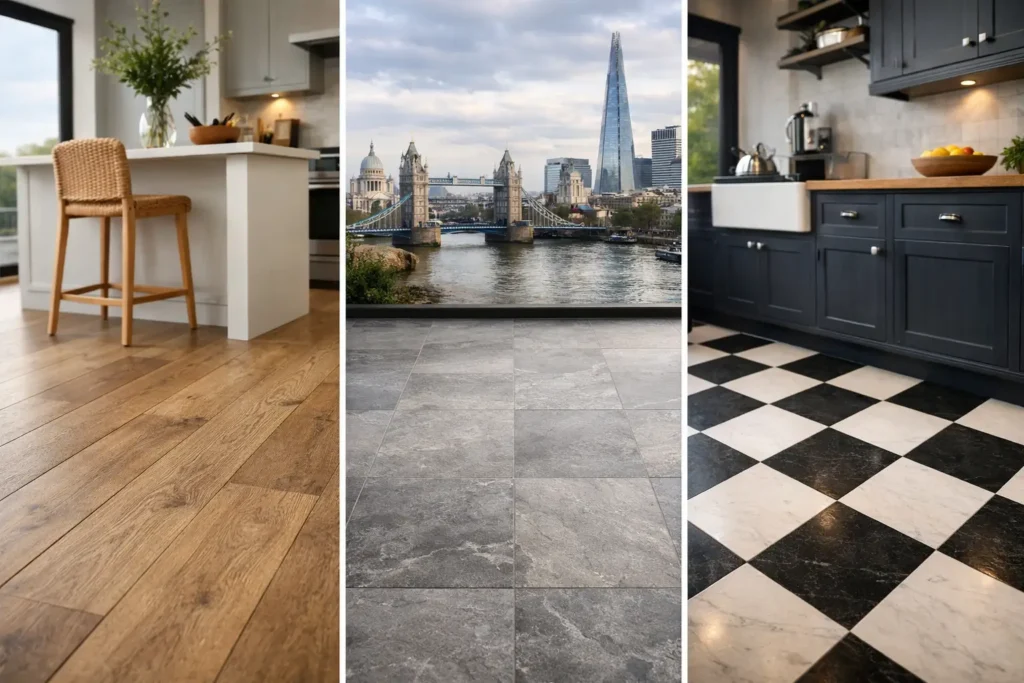
A kitchen floor has to do more than look beautiful beneath new cabinetry and worktops. It needs to withstand dropped pans, muddy shoes, busy family breakfasts and frequent cleaning, while helping the whole room feel considered and complete. The best kitchen flooring options balance that day-to-day resilience with the warmth, texture and character that suit your home.
For a high-quality kitchen renovation, flooring should be decided early rather than treated as a finishing detail. Its thickness affects plinth heights, door clearances and transitions into adjoining rooms. Its tone can make a compact London kitchen feel lighter, or give an open-plan space a stronger sense of flow. Most importantly, the right choice should feel right for how you genuinely live.
What makes a kitchen floor the right choice?
There is no single perfect kitchen floor. A couple with a low-traffic galley kitchen may prioritise natural materials and a refined finish. A family kitchen opening on to a garden often needs something more forgiving, water-resistant and easy to clean. Underfloor heating, pets, direct sunlight and whether the floor continues into a dining or living area will also shape the decision.
Before choosing a material, consider four practical questions. How much moisture and foot traffic will the floor receive? Do you want a continuous finish through neighbouring spaces? Is underfloor heating part of the plan? And how much ongoing maintenance are you comfortable with?
The answers will narrow the field quickly and help ensure the finished kitchen remains as practical in five years as it is impressive at handover.
Best kitchen flooring options for a refined renovation
Porcelain tiles: the hard-wearing premium choice
Porcelain is one of the strongest choices for kitchens where durability comes first. It is dense, highly water-resistant and easy to maintain, making it well suited to homes with children, pets or regular entertaining. Spills can be wiped away without worry, and a quality porcelain tile resists scratching and staining far better than many natural alternatives.
Design flexibility is another major advantage. Porcelain can replicate limestone, concrete, timber and marble with remarkable realism, while large-format tiles create a calm, expansive look with fewer grout lines. A soft stone-effect porcelain can bring understated luxury to a Chelsea townhouse kitchen, while a concrete-look finish can complement a contemporary extension.
The trade-off is feel. Tile is naturally hard underfoot and can feel cool without underfloor heating. It is also important to choose an appropriate slip rating, particularly near external doors. Professional preparation of the subfloor matters greatly, as uneven surfaces can lead to cracked tiles or unsightly lipping.
Luxury vinyl tile: practical without looking basic
Luxury vinyl tile, often called LVT, has earned its place in premium kitchen renovations. Modern products offer convincing wood and stone finishes, comfortable cushioning underfoot and excellent resistance to water and everyday wear. It is quieter than tile, warmer to walk on and particularly practical for households where the kitchen is constantly in use.
LVT works well in open-plan rooms because it can run continuously from the kitchen into a dining or family area. Wood-effect planks provide the appearance of a natural timber floor but are less vulnerable to the occasional spill, pet claws and the demands of family life. It is also compatible with most underfloor heating systems when correctly specified.
Not all LVT is equal. The quality of the wear layer, the realism of the design and the subfloor preparation all influence the final result. A poorly prepared base can show through over time, so this is not an area to cut corners. For clients seeking a polished, low-maintenance finish with a welcoming feel, it is often one of the most balanced options available.
Engineered wood: warmth with sensible structure
Engineered wood brings a depth and authenticity that printed finishes cannot fully reproduce. Its real timber top layer gives the kitchen natural variation, warmth and a tactile quality that suits period homes, elegant extensions and kitchens designed to blend into wider living spaces.
Unlike solid wood, engineered boards are built in layers for improved stability. This makes them more suitable for kitchens and underfloor heating, although they are not waterproof. A dropped glass of water is unlikely to cause a problem when wiped promptly; standing water, leaks and repeated saturation are another matter.
For the best performance, choose a good-quality board with a durable finish and a sufficient wear layer for future refinishing. Matt lacquered or hardwax-oiled finishes are popular choices, although oil requires more regular care. Engineered wood is ideal for homeowners who accept a little maintenance in return for a floor that develops character over time. It is less suitable for kitchens that double as a high-traffic route to the garden in wet weather.
Natural stone: distinctive and enduring
Natural stone offers individuality that manufactured materials cannot replicate. Limestone, slate and travertine each bring their own movement, texture and tonal variation, creating a grounded, timeless finish beneath bespoke cabinetry. In the right property, stone can make a kitchen feel established rather than newly fitted.
It does ask more of the homeowner. Most natural stone needs sealing to protect against stains and moisture, and some varieties are more porous or prone to marking than others. Acidic spills, such as wine or lemon juice, can be an issue with certain stones. A honed finish is generally more forgiving than polished stone, especially in a working kitchen.
Stone pairs beautifully with underfloor heating and can last for decades when installed and maintained correctly. It is an investment choice for those who value genuine material character and understand that small variations and signs of use are part of its appeal.
Sheet vinyl: a capable budget-conscious option
Sheet vinyl is not usually the first material considered for a luxury renovation, but it can be a sensible solution for utility kitchens, rental properties or projects where the budget needs to work harder elsewhere. It is water-resistant, soft underfoot and available in a broad range of finishes.
The key limitation is longevity and visual depth. Even well-made sheet vinyl will not offer the same refined appearance, repairability or premium feel as porcelain, stone, engineered wood or high-specification LVT. Still, when selected carefully and fitted well, it can provide a clean, practical finish in the right setting.
Choosing flooring for an open-plan kitchen
Open-plan kitchen living has changed how many homeowners approach flooring. A continuous material can make the space feel generous and cohesive, especially in an extension or reconfigured ground floor. LVT and engineered wood are often effective here because they bring warmth to both food preparation and relaxation areas.
Porcelain also works well across an open-plan footprint, particularly with underfloor heating, but its harder acoustic quality should be considered. Rugs can soften seating zones, though they should not become a substitute for choosing a floor that feels comfortable in the first place.
A change of flooring can be equally successful when it has a purpose. Porcelain in the kitchen and timber in the living area can define each zone without needing a wall. The transition must be planned precisely, however, so levels align cleanly and the junction feels intentional rather than improvised.
Small details that protect the finished result
The best material can disappoint if installation decisions are rushed. Subfloor levelling, moisture testing, expansion gaps, grout colour and edge details all affect performance and appearance. A pale grout may look striking in a showroom but demand more attention in a busy family kitchen. Similarly, very dark floors can show dust and footprints more readily than mid-toned finishes.
Think about the practical routes through the room too. A durable entrance mat at a garden door reduces grit, while felt pads beneath dining chairs help protect wood and LVT. If you are fitting underfloor heating, confirm the maximum temperature recommended by the flooring manufacturer before finalising the specification.
At ARC Global Engineering, flooring is considered alongside the kitchen layout, lighting, cabinetry and adjacent rooms from the planning stage. That joined-up approach helps avoid late changes, mismatched levels and unnecessary disruption during construction.
The right kitchen floor should support everyday life quietly: comfortable when you are making coffee barefoot, resilient when the house is busy, and beautiful enough to make the entire renovation feel complete. Choose the material that fits your routines as well as your taste, and give it the same careful attention as the finishes you see at eye level.