
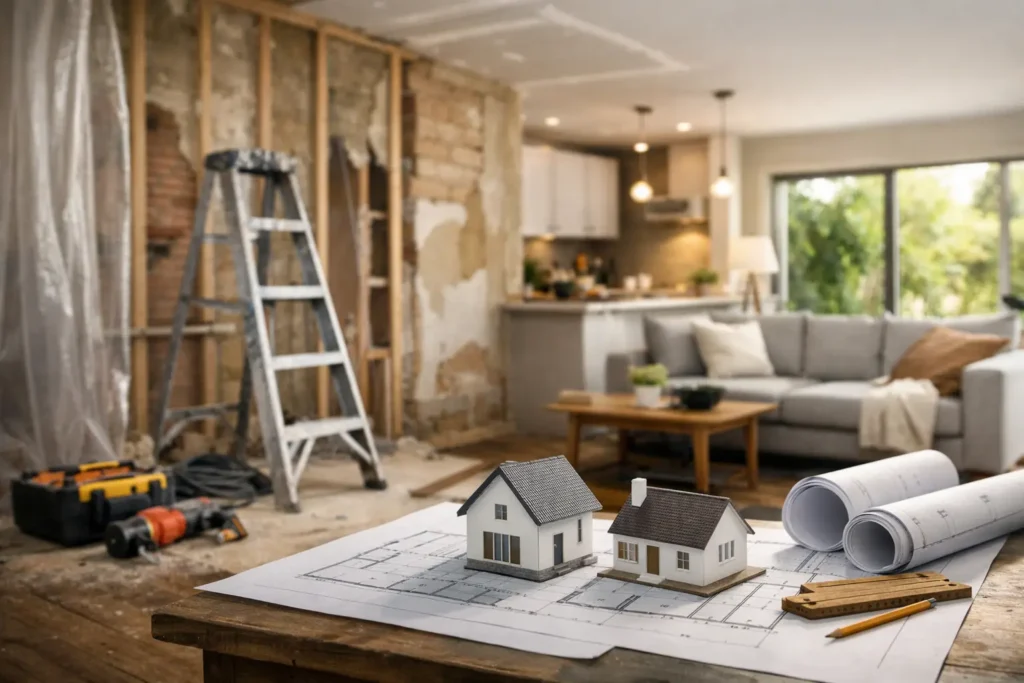
Most whole house refurbishments do not go off course because of one dramatic mistake. They drift. A decision made too late, a budget stretched by small changes, a trade booked before the design is settled. A strong guide to whole house refurbishment is less about grand ideas and more about getting the order, scope and communication right from the start.
For homeowners investing seriously in their property, that matters. A full refurbishment is not just a building project. It is a chance to improve how your home feels, functions and supports daily life, whether that means opening up the ground floor, upgrading tired bathrooms, modernising services, or creating a better balance between family space and private retreat. Done well, it adds comfort, value and confidence. Done poorly, it can become expensive and exhausting.
What a whole house refurbishment really involves
A whole house refurbishment usually means renovating most or all of the internal spaces in one coordinated project. That may include reconfiguring layouts, replacing kitchens and bathrooms, upgrading plumbing and electrics, fitting new flooring, improving lighting, replastering, redecorating and refining the final finishes throughout.
In some homes, the work is mainly cosmetic. In others, it is far more structural, with walls moved, steel installed, windows replaced or extensions integrated into the overall scheme. The key point is that a full refurbishment works best when viewed as one connected plan rather than a collection of separate rooms.
This is where many homeowners face a genuine trade-off. Refurbishing room by room may feel safer in the short term, but it often creates duplicated labour, inconsistent finishes and more disruption over time. A whole-house approach demands more upfront planning, yet it typically delivers a cleaner result and better control.
A guide to whole house refurbishment starts with priorities
Before drawings, quotes or material samples, you need clarity on what the refurbishment is trying to achieve. Not every project is about adding luxury for its own sake. Often, the best outcomes come from solving practical frustrations.
You may want a brighter kitchen and dining area for family life, a more considered principal suite, better storage, improved energy efficiency or a layout that suits hybrid working. These priorities shape every later decision, from budget allocation to programme.
It also helps to separate must-haves from would-like-to-haves. That distinction protects the project when costs shift, as they sometimes do once older properties are opened up. In period homes across London and the surrounding areas, hidden issues such as outdated wiring, uneven floors or ageing pipework are not unusual. If your priorities are clear, you can respond without losing the essence of the design.
Budgeting for quality without losing control
One of the most common concerns around whole house refurbishment is cost uncertainty. That concern is justified. The final figure depends on the size of the property, the level of structural change, the quality of finishes and the condition of the existing building.
What matters most is not chasing the lowest number. It is understanding what is included, what is excluded and where the risk sits. A vague estimate can look appealing early on, then become costly once the job is underway. A detailed, itemised quote gives you something much more valuable: visibility.
A sensible budget should include construction costs, design fees where relevant, fixtures and finishes, contingency and any temporary living arrangements if you are moving out during the works. Clients often underestimate the impact of finish selections. Joinery details, stone surfaces, bespoke lighting and premium sanitaryware can transform a scheme, but they need to be planned honestly against the overall spend.
There is also a lifestyle question here. If this is your long-term home, it may be worth investing more in the elements you interact with every day – layout, natural light, storage, heating, acoustics and craftsmanship. These are the details that continue to pay back long after trends change.
Planning the sequence before work begins
A successful refurbishment is built twice: first on paper, then on site. The more decisions resolved before construction starts, the smoother the delivery tends to be.
That means finalising layouts, reviewing electrical positions, selecting bathrooms and kitchen designs, agreeing flooring transitions, confirming door schedules and understanding lead times for key materials. If these choices are left too late, site teams end up waiting or improvising. Neither leads to flawless renovation outcomes.
Programme matters as much as design. Certain stages can only happen in the right order. First fix services need walls opened up. Plastering needs the building suitably prepared. Final finishes need dry, stable conditions and careful coordination. Where clients experience stress is often not the volume of work itself, but the feeling that no one is controlling the sequence. A well-managed project replaces that uncertainty with momentum.
The team you choose shapes the experience
The quality of a whole house refurbishment is not only about workmanship. It is about management, communication and accountability. Even excellent trades can struggle to deliver a polished result if the project is poorly coordinated.
For homeowners who want a stress-free process, an end-to-end service has clear advantages. Design development, pricing, scheduling, procurement and site delivery all sit under one managed structure. That reduces the risk of gaps between responsibility areas and keeps decisions moving.
If you are comparing companies, look beyond attractive photos. Ask how variations are handled, who your main point of contact will be, how progress is reported and how timelines are protected. Good refurbishment partners are transparent about what they can deliver and disciplined about how they deliver it.
For larger or more design-led schemes, this becomes even more important. A premium finish rarely comes from speed alone. It comes from attention, supervision and a shared understanding of the standard expected in every room.
A guide to whole house refurbishment should include the disruption question
Many homeowners focus heavily on the finished result and less on how they will live through the process. That is understandable, but it is worth confronting early. Whole house refurbishments are disruptive by nature.
In some cases, remaining in the property is possible, especially if the work is phased and there is enough separation between liveable and active areas. In other cases, moving out is the better decision. It may increase short-term cost, but it can shorten the programme, reduce stress and allow the site team to work more efficiently.
This depends on the scale of the works, the presence of children, pets or home working arrangements, and the condition of essential services during the build. There is no universal answer. What matters is making the decision deliberately rather than reactively.
Design choices that improve daily life
The best refurbishments are not defined by one showpiece feature. They succeed because the house feels coherent. Light switches are where you need them. Storage is built around real habits. Flooring flows properly. Bathrooms feel calm rather than cramped. The kitchen works both socially and practically.
That is why the most valuable design conversations are often about routine. How do mornings work in your home? Where do coats, school bags and laundry collect? Do you entertain often, or is quiet family time the priority? These answers shape a home that feels tailored rather than generic.
In London properties especially, space needs to work hard. Clever reconfiguration can often achieve more than additional square footage alone. Better sightlines, stronger zoning and carefully considered joinery can make an existing footprint feel far more generous.
Common mistakes to avoid
The most expensive mistakes are usually predictable. Starting before the scope is properly defined is one. Choosing on price alone is another. So is treating finishes as an afterthought when they have a major impact on both budget and overall feel.
Another frequent issue is making too many changes once works have started. Some refinements are inevitable, but repeated late-stage alterations affect cost, sequencing and confidence on site. A clear process for approvals and communication helps keep the project steady.
It is also worth being realistic about timescales. Quality refurbishment takes planning, skilled labour and careful finishing. A rushed programme may sound attractive, but speed has limits if you want precision.
What good looks like at handover
By the time a whole house refurbishment is complete, the outcome should feel calm, resolved and ready to live in. Not nearly finished. Not awaiting a string of snagging fixes that drag on for months. Good handover means the final details have been taken seriously, documentation is clear, and the transition back into the home feels straightforward.
That level of finish does not happen by chance. It comes from early planning, realistic budgeting, disciplined project management and a team that treats your home with the care it deserves. Companies such as ARC Global Engineering build trust by combining craftsmanship with structured delivery, which is exactly what homeowners need when the scale of a renovation is significant.
If you are considering a full refurbishment, aim for more than a nicer-looking house. Aim for a home that works better, feels better and has been delivered with clarity at every stage. That is where real value lies.