
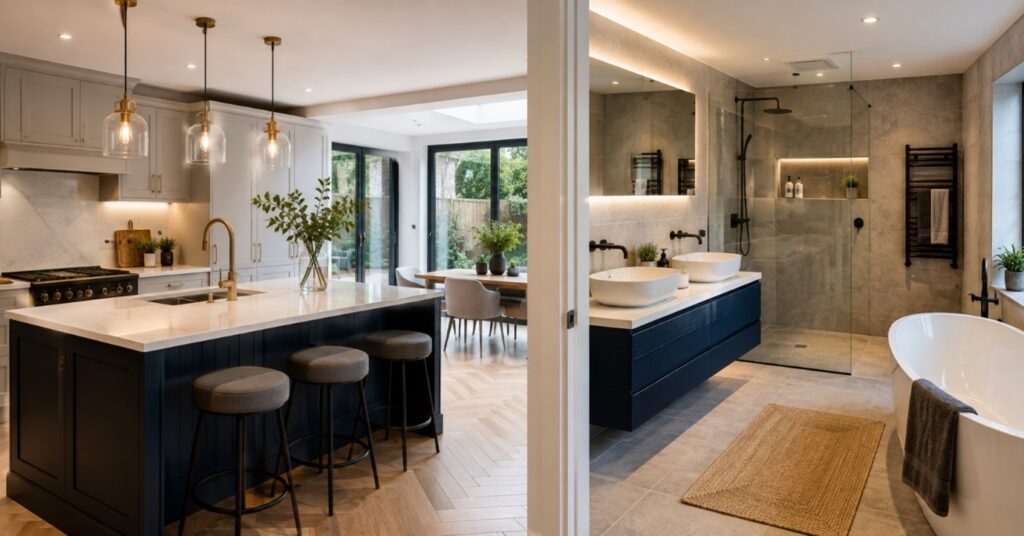
A beautiful finish is only part of the story. The most successful kitchen and bathroom transformations change how a home works day to day – making mornings easier, family life smoother, and every square metre feel better considered.
For many homeowners, these are the two rooms that carry the most pressure. Kitchens need to perform for cooking, entertaining, storage and family routines, often all at once. Bathrooms must balance comfort, durability and efficient use of space, especially in busy households. When both are renovated with care, the result is more than visual improvement. It is a home that feels calmer, more practical and more valuable.
Why kitchen and bathroom transformations matter most
Not every renovation delivers the same impact. A spare room refresh may be welcome, but kitchens and bathrooms shape daily experience in a way few other spaces do. They are used constantly, exposed to heavy wear, and expected to function without compromise.
That is why these projects deserve more than a cosmetic update. New doors, tiles or fittings can improve appearance, but if the layout remains awkward or storage is still lacking, the frustration stays. The strongest results come from looking at how the room is truly used. Where does clutter collect? Is there enough task lighting? Do multiple people need to move through the space at once? Does the room support the way the household lives now, not five years ago?
For homeowners investing in long-term quality, this is where value is created. A well-or bathroom renovation London homeowners choose should not simply look current. It should feel tailored, durable and easy to live with for years.
What good kitchen and bathroom transformations actually involve
There is a common assumption that transformation means dramatic change. Sometimes it does. A kitchen may be opened into a dining area, or a bathroom may be fully reconfigured to create a walk-in shower and better storage. But sometimes the most effective shift is less obvious.
In a kitchen, moving an island by even a small amount can improve circulation. Reworking cabinetry to include deep pan drawers, integrated bins and appliance housing can remove visual noise and make the room easier to use. Material choices matter too. Natural stone may offer luxury and character, but it requires the right maintenance approach. Quartz provides a more consistent finish and lower upkeep, which can suit busy family homes better. Neither is automatically right. It depends on lifestyle, priorities and budget.
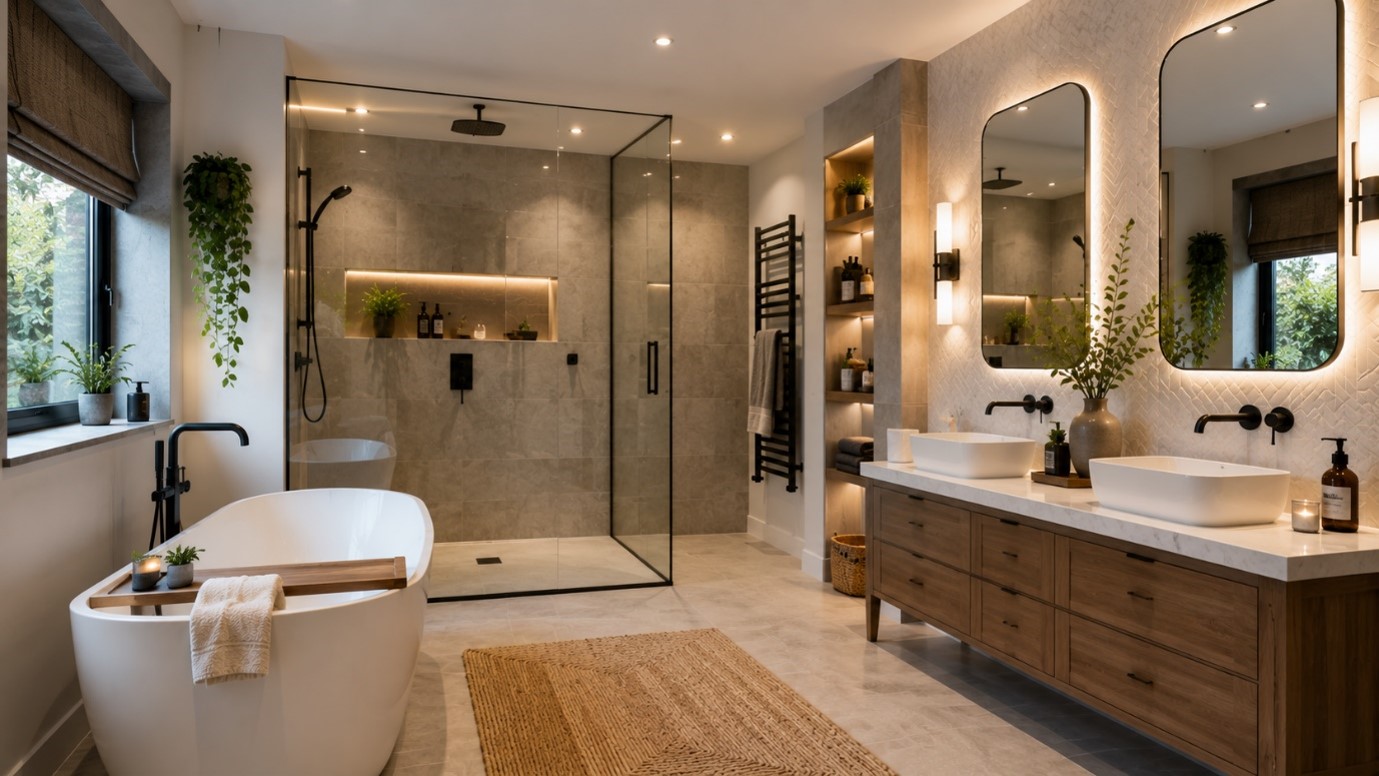
In bathrooms, small planning decisions often have a disproportionate effect. Recessed niches, better ventilation, underfloor heating and carefully positioned lighting can turn a standard room into a much more comfortable one. If space is tight, wall-hung furniture and concealed cisterns can make the room feel lighter and less crowded. In period properties, design also needs to respect the character of the home rather than forcing a look that feels disconnected from the rest of the interior.
This is why experienced guidance matters. Good renovation is not about applying a single style formula. It is about balancing aesthetics, buildability, budget and everyday function.
Starting with the right brief
The quality of the outcome usually reflects the quality of the early planning. Homeowners often begin with inspiration images, but a successful brief goes further. It should define what is not working today, what must improve, and what level of finish and investment makes sense for the property.
That may mean prioritising storage over statement features in a compact London kitchen. It may mean creating a family bathroom that can cope with school mornings without sacrificing a polished look. Or it may mean designing a principal en suite that feels genuinely restorative at the end of a long day.
A clear brief also reduces costly changes later. When layouts, finishes and practical requirements are resolved early, the build phase runs with less disruption. That matters for any project, but especially in occupied homes where clients want progress they can trust.
The design decisions that shape the result
The best kitchen and bathroom transformations rarely come down to one standout feature. They succeed because multiple decisions have been handled well and work together.
In the kitchen
Layout leads everything. The room must support movement between cooking, prep, storage and social areas without bottlenecks. In open-plan homes, the kitchen also needs to connect naturally to the wider living space. That often means paying close attention to sightlines, floor finishes and how much of the working area remains visible.
Joinery has a major influence on quality. Bespoke or carefully specified cabinetry allows the room to feel integrated rather than assembled. Handles, paint tones, timber textures and worktop details all contribute, but proportion matters just as much. Oversized units can dominate smaller rooms, while too many design features can make the space feel busy.
Lighting is another area where quality shows. Layered lighting, with task, ambient and feature lighting used thoughtfully, gives the room flexibility from early mornings to evening entertaining.
In the bathroom
Bathrooms demand precision. Waterproofing, drainage, extraction and tile setting all need to be right behind the scenes before the room can feel luxurious on the surface. This is where craftsmanship and disciplined project delivery make a visible difference over time.
Comfort should sit alongside appearance. A statement bath may look impressive, but if it crowds the room or limits movement, it may not be the best choice. Similarly, beautiful fittings are only worthwhile if they are reliable and suited to daily use.
The most refined bathrooms often feel simple. That simplicity is usually the result of careful planning, not a lack of detail. Hidden storage, clean transitions between materials and a restrained palette can create a space that feels calm and expensive without trying too hard.
Managing budget without compromising quality
Premium renovation does not mean spending without direction. It means investing where it counts and understanding where practical alternatives can still deliver an excellent finish.
In kitchens, worktops, cabinetry and appliances usually absorb a large share of the budget. In bathrooms, tiling, brassware and sanitaryware can escalate quickly. The key is not to chase every upgrade at once. A better approach is to identify the features that will most affect everyday experience and long-term performance.
For example, homeowners may choose to invest more in custom storage and durable surfaces while keeping decorative elements more restrained. In a bathroom, they may prioritise quality shower fittings, proper tanking and underfloor heating, then simplify tile formats to maintain balance.
This is also where itemised quoting and upfront planning create reassurance. Clients should understand what they are paying for, what is included, and where adjustments can be made if needed. Hidden costs and vague allowances are often what turn an exciting renovation into a stressful one.
Why delivery matters as much as design
Even a strong design can be undermined by poor coordination. Delays, unclear communication and weak site management affect the experience as much as the finished space. For busy homeowners, that part of the process matters enormously.
An organised renovation partner brings structure from the beginning. Surveys, design development, scheduling, procurement and site sequencing need to align so the project moves forward with control. This is especially important in London homes, where space constraints, access limitations and existing building conditions can add complexity.
That is one reason many clients prefer a full-service approach. When one team oversees design intent, technical planning, project management and construction, there is usually less room for confusion. Decisions happen faster, accountability stays clear, and the final result is more consistent.
ARC Global Engineering takes that approach because homeowners should not have to manage multiple moving parts on their own. A renovation should feel guided and transparent, not fragmented.
Choosing transformations that still feel right in five years
Trends can be useful, but they should not drive every choice. Kitchens and bathrooms are expensive rooms to revisit, so longevity matters. That does not mean playing it safe to the point of blandness. It means making decisions with both present enjoyment and future relevance in mind.
Natural materials, well-resolved layouts and timeless colour palettes often age better than highly specific design statements. At the same time, a home should still reflect the people living in it. A family home in Clapham may need a very different solution from a quieter period property in Richmond, even if both owners want the same standard of finish.
The right transformation feels personal, not generic. It supports the rhythm of the household, suits the architecture of the property and delivers a standard of workmanship that stands up to real life.
When kitchens and bathrooms are renovated well, the effect reaches far beyond those rooms. The home becomes easier to live in, more enjoyable to return to, and better aligned with the life happening inside it. That is the kind of transformation worth doing properly.