
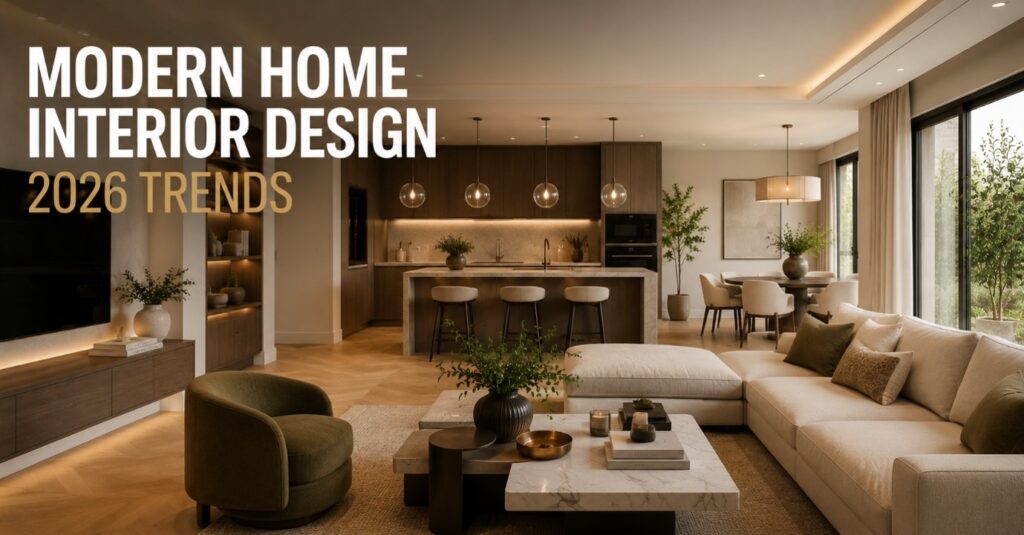
A few years ago, many homeowners wanted interiors that looked impressive on a screen. Now the brief is more grounded: spaces need to feel calm on a busy Tuesday, practical during a family gathering and polished enough to hold their value over time. That shift is exactly what modern home interior design 2026 is capturing – less show, more substance, with thoughtful detailing that supports real life.
For homeowners planning a renovation, this matters because trends now have a longer shelf life. The strongest ideas for 2026 are not novelty finishes or short-lived styling tricks. They are better layouts, warmer materials, smarter storage and a more tailored approach to how each room is used. The homes that will feel current next year are the ones designed with clarity, comfort and quality execution in mind.
What modern home interior design 2026 really looks like
The defining characteristic of modern home interior design 2026 is balance. Clean lines still matter, but the stark, ultra-minimal look is giving way to something more welcoming. Rooms are becoming softer in mood, richer in texture and more responsive to the way households actually live.
In practical terms, that means kitchens with strong architectural presence but less visual harshness, bathrooms that feel restorative rather than clinical, and living areas that combine openness with clear zoning. Homeowners are also moving away from copy-and-paste schemes. Instead of chasing a generic luxury look, they are choosing finishes and layouts that suit their property, their routines and the long-term value of the home.
This is where professional planning makes the difference. A trend can look excellent in a showroom but feel underwhelming in a real house if proportions, lighting and material combinations are not handled properly. The 2026 approach is less about individual products and more about how the whole interior works together.
Warm minimalism is replacing cold simplicity
Minimalism is not disappearing, but it is becoming more liveable. The sharp contrast palettes and bare finishes that dominated some recent interiors are being replaced by warmer neutrals, tactile surfaces and quieter detailing. Think stone tones, soft taupes, off-whites, muted greens and timber with visible grain rather than high-gloss uniformity.
This does not mean every room should be beige. It means colour is being used with more confidence and restraint. A deeper olive kitchen island, a clay-toned cloakroom or a textured plaster wall can bring character without overwhelming the scheme. The goal is a home that feels settled and considered.
There is a trade-off here. Warm minimalism needs discipline to work well. If every surface is heavily textured or every neutral is slightly different, the result can feel muddled rather than refined. Successful schemes rely on consistency, proportion and a clear materials palette from room to room.
Layouts are becoming more purposeful
Open-plan living remains desirable, but the all-in-one room is being reconsidered. Many households still want connection between cooking, dining and relaxing, yet they also want better definition. Modern interiors in 2026 are solving this with subtle zoning rather than hard separation.
A change in flooring, a dropped ceiling detail, bespoke joinery, glazed partitions or a carefully positioned island can create structure without losing flow. This is especially useful in family homes, where one person may be working, another cooking and others relaxing in the same overall space.
The same thinking applies beyond the main living area. Spare rooms are being designed with flexibility from the outset. A guest room may also serve as a home office. A loft conversion might need to function as both a quiet retreat and a practical work zone. Good interior design now anticipates these overlaps rather than treating them as an afterthought.
For renovation projects, this often means the best investment is not a decorative upgrade alone but a better reconfiguration. When the layout improves, the interior feels more expensive, even before the finishing touches go in.
Kitchens and bathrooms are leading the shift
If one area defines modern home interior design 2026 most clearly, it is the kitchen. The move is towards fewer but better elements: cleaner cabinetry lines, integrated appliances, statement stone or stone-effect surfaces, layered lighting and storage that reduces visible clutter. There is also growing demand for pantries, breakfast cupboards and utility zones that keep the main kitchen calm and functional.
In terms of style, fluted details, natural timber accents, mixed metal finishes and curved edges are all appearing more frequently. Yet the best kitchens avoid forcing too many features into one space. A well-designed kitchen should feel composed first and fashionable second.
Bathrooms are following a similar path. Homeowners want a spa-like atmosphere, but they also want easy maintenance, strong ventilation and durable finishes. Large-format tiles, walk-in showers, wall-hung vanity units and brushed brass or black fittings remain popular, though softer metallics and warmer stone looks are gaining ground.
It depends, of course, on the property. A period house may suit a more layered bathroom design with classic references, while a contemporary extension can carry a cleaner, more architectural finish. What matters is that the bathroom feels intentional and appropriate to the wider home.
Bespoke storage is becoming a design feature
Storage used to sit in the background. In 2026, it is central to how interiors are planned. Not because homeowners want more cupboards for the sake of it, but because visual calm depends on having a proper place for everyday items.
This is one of the clearest differences between an interior that looks good for a week and one that performs for years. Media units, boot room joinery, under-stair storage, fitted wardrobes and window seating with concealed compartments all help a home stay organised without compromising style.
The premium end of the market is leaning further into bespoke joinery because it solves multiple issues at once. It can improve proportion, define zones, add warmth and create a more tailored finish than off-the-shelf furniture. For families and busy professionals, that is not just a visual upgrade. It is a practical one.
Lighting is doing more of the heavy lifting
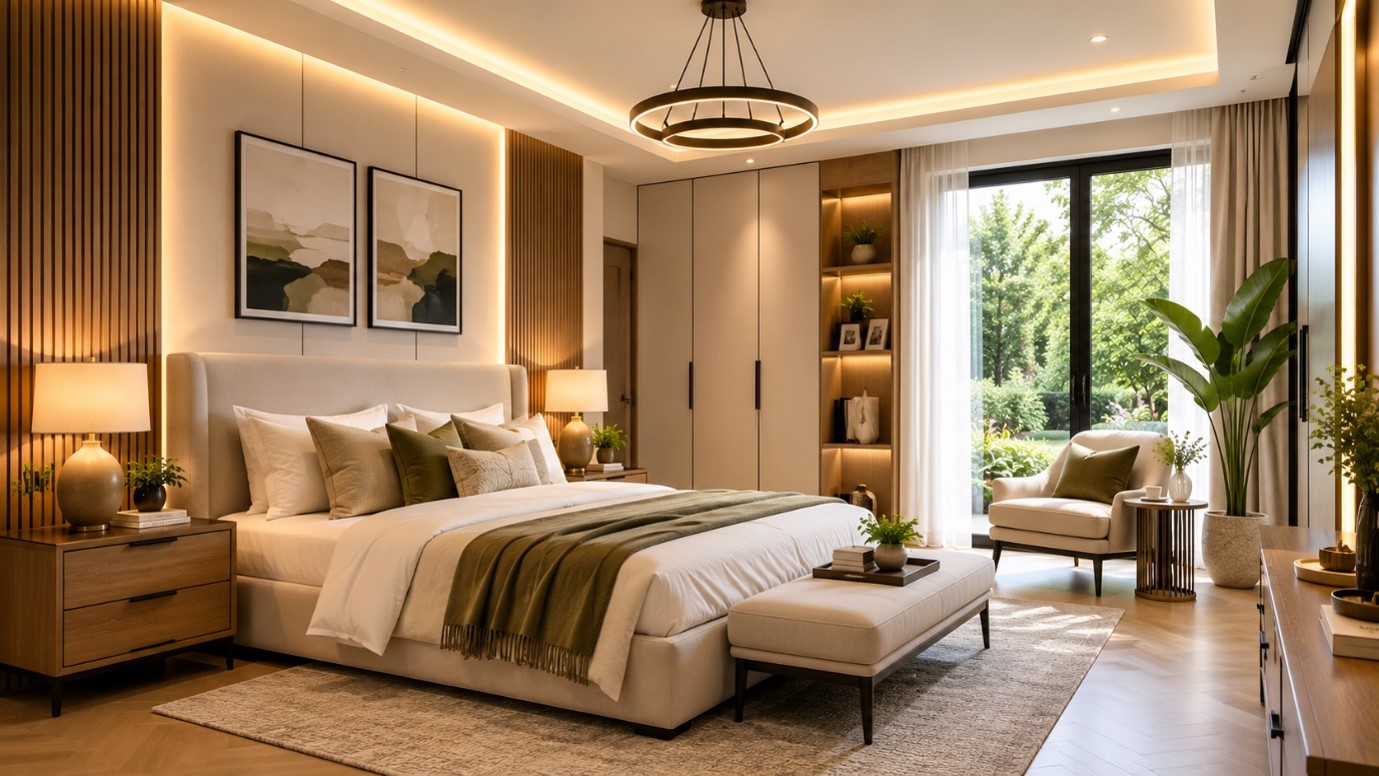
One of the easiest ways to undermine a strong renovation is to treat lighting as a late-stage decision. In the best 2026 interiors, lighting is considered from the beginning, not added at the end.
This means layered lighting schemes rather than a single central fitting. Recessed spotlights still have a place, but they work best alongside wall lights, pendant features, under-cabinet task lighting and softer ambient sources. The aim is flexibility. A kitchen needs bright light for food preparation, but it should also feel inviting in the evening. A bathroom should be functional at 7 am and restful at 9 pm.
Natural light remains a major driver too. Internal glazing, slimmer sightlines, rooflights and carefully planned extensions are all helping more daylight move through the home. When layout, materials and lighting are planned together, interiors feel far more refined.
Sustainability is becoming quieter and smarter
For many homeowners, sustainable design is no longer a separate talking point. It is part of making sensible long-term decisions. In interiors, that means choosing durable materials, improving insulation during renovation works, selecting quality products that will not need replacing quickly and avoiding finishes that date too fast.
This quieter approach matters because genuinely sustainable choices are not always the most obvious ones. A responsibly chosen timber floor that can be refinished may be a better investment than a cheaper option that needs replacing. A timeless kitchen design may outlast several trend-driven alternatives. Good renovation planning reduces waste, avoids costly rework and delivers a home that performs better for longer.
That is one reason many clients prefer a single, managed renovation partner. When design intent, budgeting and build quality are aligned from the start, it is easier to make decisions that support both style and longevity.
How to approach modern home interior design 2026 in your own home
The smartest way to approach modern home interior design 2026 is not to ask which trend to copy. It is to ask how your home needs to work over the next five to ten years. A growing family, changing work patterns or plans to stay in the property long term should all shape the design brief.
Start with the layout, then the materials, then the detailing. If the space flows well and the finishes are coherent, the end result will feel current without trying too hard. It is also worth being realistic about where to spend. Joinery, lighting, flooring and core kitchen or bathroom elements usually have more impact than purely decorative extras.
For homeowners who want a polished result without the usual renovation stress, the process matters as much as the design. Clear specifications, itemised costs, dependable timelines and close communication are what turn a strong concept into a finished home that genuinely lives well. That is where experienced teams such as ARC Global Engineering add real value – not just by building beautifully, but by guiding the project with care and precision from start to finish.
The most appealing interiors in 2026 will not be the loudest or the most complicated. They will be the homes that feel effortlessly right the moment you walk in – calm, well made and designed around the life you actually want to live.